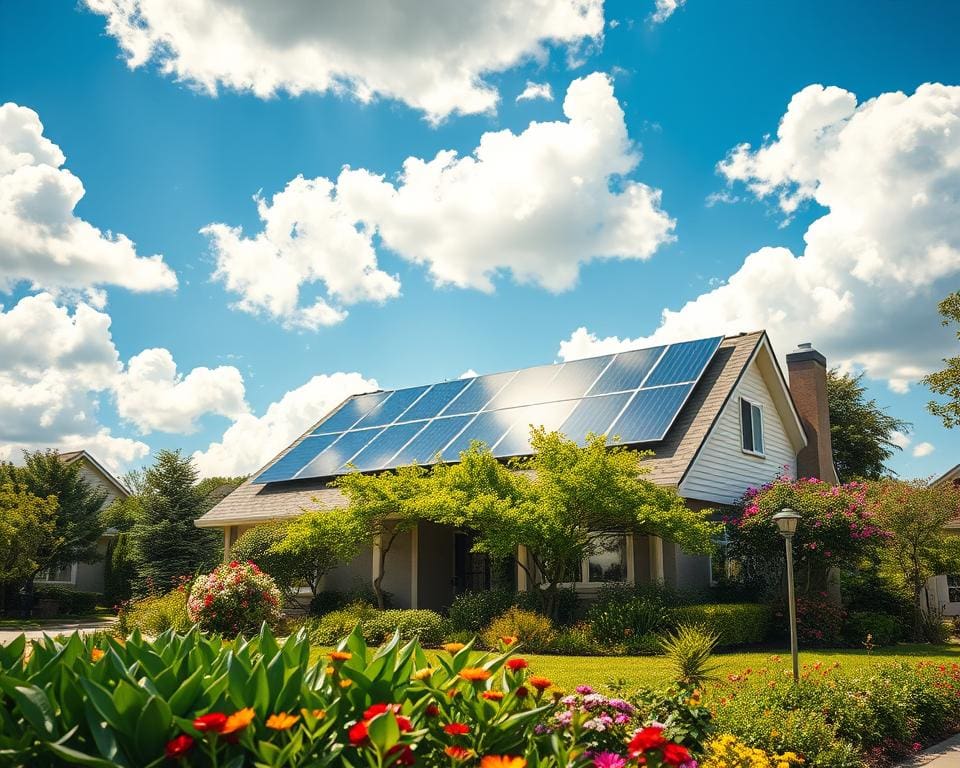
Solar panels give you a practical way to generate your own electricity at home. Instead of relying fully on power from the National Grid, you can produce energy on your roof and use it as part of your daily routine.
Most household systems use solar photovoltaic (PV) panels. They turn daylight into electricity. This differs from solar thermal technology, which uses sunlight to heat water for your home.
Solar PV can work in British conditions because it uses daylight, not just strong sunshine. Output still changes with the season, weather, roof direction, shade and system size. A south-facing roof often performs well, but other roof positions may also suit a carefully planned system.
During daylight hours, your panels generate electricity for your home to use first. Any extra power may charge a battery or flow back to the grid. A battery can help you use more of your home solar energy in the evening.
Solar power for homes does not usually provide a constant supply on its own. You will normally stay connected to the grid, especially overnight or during periods of low generation. This connection helps keep your electricity supply steady throughout the year.
Domestic solar panels can reduce your reliance on grid electricity and may help you reduce energy bills. They can also make your energy use easier to track and lower emissions compared with electricity made from fossil fuels. The financial return depends on your usage, installation cost, export payments, maintenance and finance terms.
As part of the wider renewable energy UK market, solar systems can support a cleaner energy mix. This article first explains how PV systems work, then examines their benefits, before covering how to assess, choose and install solar panels in the UK.
How solar panels generate electricity for your home
Understanding how solar panels work helps you judge what a system can do for your home. Daylight reaches the roof, the panels produce electricity, and your home uses that power before any surplus moves elsewhere.
How photovoltaic panels convert sunlight into usable energy
Photovoltaic panels contain cells made from semiconductor materials, usually silicon. When daylight reaches a cell, it gives electrons enough energy to move. This movement creates direct current (DC) electricity.
Several photovoltaic cells join to form one panel. Multiple panels create an array. Most arrays sit on a roof, though a ground-mounted system may suit a property with enough clear, open space.
Solar panel electricity generation takes place throughout the year. Output tends to rise during the longer, brighter days of spring and summer. Shorter days, cloud and low winter light reduce production.
Roof direction and pitch affect performance in the UK. A south-facing roof is often favourable. East-facing and west-facing roofs can work well too, with stronger output in the morning or afternoon. A north-facing roof may produce less, depending on its pitch and nearby obstructions.
Chimneys, trees, neighbouring buildings and roof structures can cast shade. Partial shade may lower the output of affected panels. Your installer should assess the site before recommending a system.
The role of inverters, batteries and your home electricity system
Homes and the public network use alternating current (AC), while panels produce DC electricity. A solar inverter changes DC into usable AC. It manages the link between your panels, your home and the grid.
A string inverter can suit a simple roof with similar panel conditions. Microinverters or power optimisers may help where panels face different directions or receive partial shade. The design and the installer’s technical assessment should guide the choice.
Your solar PV system normally sends available electricity to your appliances first. Surplus power can charge home battery storage. Any remaining surplus may be exported to the grid.
A battery stores extra daytime generation for use later, such as during the evening. It increases self-consumption, though it raises the purchase cost, needs suitable space and has a finite operating life. Its value depends on capacity, charge and discharge limits, efficiency, demand and periods of low sunlight.
A battery does not make you fully independent from the grid. Your system connects to the consumer unit and needs suitable protection, isolation equipment, monitoring and records. Installation must meet relevant electrical and safety requirements.
Grid-connected solar panels usually shut down during a power cut. This protects workers repairing the network. Backup operation needs special equipment and safe electrical isolation.
How much electricity solar panels can produce in the UK
UK solar energy output depends on installed capacity, panel efficiency, roof direction, pitch, shade, local weather and daylight hours. Temperature, inverter performance and system losses affect the result too.
System size is commonly shown in kilowatt-peak (kWp). This figure describes the maximum output under set test conditions. It does not mean the system will produce that level throughout the day.
Ask for a property-based forecast rather than relying on a national average. A professional assessment should set out expected annual generation, seasonal changes, likely self-consumption and possible exports. The Energy Saving Trust offers useful independent information about domestic solar PV and potential generation, though every forecast remains an estimate, not a guarantee.
A smart meter can show electricity imported from and exported to the grid. Monitoring platforms may display panel output, household use and battery performance. The information available varies by manufacturer.
Roof area, orientation and shade should shape your decision. You can explore ways to make your home more energy before comparing system sizes. Supplier or independent calculators can test payback across a range of generation, tariff and export outcomes.
Benefits of generating your own household electricity
One of the main benefits of solar panels is that you buy less electricity from your supplier. Your greatest direct saving often comes from using solar power in your home while the panels are generating it. This can help deliver lower energy bills and greater control over daily energy use.
Self-consumption means using your own solar electricity instead of sending it to the grid. You could run a washing machine, dishwasher or heat pump during daylight hours. Charging an electric vehicle when generation is high can raise your on-site use, provided your travel needs and charging controls suit this pattern.
Using solar power at home can be more valuable than exporting it when your import tariff costs more than the export rate. Your solar electricity savings depend on your tariff, system size, usage habits and export arrangement. Smart monitoring can show when high-energy appliances are running and help you change their timing.
The Smart Export Guarantee allows participating electricity suppliers to pay eligible small-scale renewable generators for electricity sent to the grid. Rates and eligibility rules vary between suppliers. Compare current terms instead of assuming that every provider offers the same return.
SEG payments are separate from the savings you make by using solar electricity in your home. Your installer or supplier should explain registration, meter requirements and the evidence needed for an export tariff. These details can affect the income you receive.
A battery can store some daytime generation for use in the evening. This may increase energy independence and reduce the amount of electricity you import. Battery economics depend on the purchase price, usable capacity, efficiency, warranty, expected cycling and your electricity tariffs.
Solar PV can help you reduce carbon emissions because it produces electricity without direct combustion during operation. Panels, inverters, batteries and mounting equipment have embodied emissions from manufacture, transport and installation. The overall impact depends on the system’s design, performance and lifespan.
Solar panels can reduce your exposure to changes in grid prices, yet they cannot remove every energy cost. You may still pay standing charges, import electricity during darker periods and meet maintenance or replacement costs. Variable generation, shading, roof limits and export-rate changes can affect your savings.
The value of home renewable energy can extend beyond your own property. More small systems increase renewable generation and may reduce demand for electricity from higher-carbon sources. One household installation cannot solve wider energy challenges, but it can support a cleaner electricity system.
A well-designed system may appeal to future buyers. Its effect on property value is not guaranteed. Buyers may consider system ownership, remaining warranties, installation quality, roof condition and local market demand. Owned or well-financed systems can be easier to explain during a sale than leased arrangements.
The upfront cost remains a key limit. Your solar panel payback may take several years, and the period depends on installation costs, finance interest, energy prices, export income, panel degradation, maintenance and replacement parts. Inverters often need attention before the panels, while batteries have separate warranties.
Assess the expected lifetime value rather than focusing only on headline bill savings. Independent guidance from the Energy Saving Trust and Ofgem can help you review tariffs, export payments and likely household savings. Your electricity supplier and installer should provide clear information about system performance, monitoring and ongoing costs.
For a wider overview of the benefits of installing solar panels, consider how generation, storage and household demand would work together in your home.
Choosing and installing solar panels in the UK
Start with a property assessment before choosing equipment. Your installer should check the roof’s age, condition, pitch, orientation, shading and structural strength. They should also review the available area, cable routes, consumer unit and electricity demand. If roof repairs may be needed soon, complete them first. Installing panels on a weak or ageing roof can add cost. Obtain detailed solar panel quotes from several reputable companies. Each quote should list the panels, capacity in kWp, inverter, battery, mounting system, monitoring, scaffolding, electrical work, forecast generation, warranties and total price.
For a solar panel installation UK project, check whether you need an MCS-certified installer for the relevant certification and export arrangements. Also review the company’s history, insurance, qualifications, workmanship guarantee and independent reviews. MCS status does not replace a careful comparison of designs or contracts. Confirm who will manage building control, electrical notifications, DNO applications, commissioning and aftercare. Solar panel planning permission differs across England, Wales, Scotland and Northern Ireland. Many roof systems meet permitted development or similar rules, but listed buildings, conservation areas, protected properties and ground-mounted systems may need consent. Ask your local planning authority before work starts.
Your installer should identify the correct distribution network operator and arrange any required notification or application. This can matter for larger systems, batteries and exported electricity. The usual process includes a survey, final design, planning and grid checks, scaffolding, roof mounting, panel fitting, inverter and battery storage installation, internal connections, testing and commissioning. At handover, request electrical certificates, system details, warranty papers, commissioning records, monitoring instructions and maintenance guidance. Check each cover separately, including the solar PV warranty, inverter, battery, mounting system, panel performance and installer workmanship guarantees.
Choose a battery by usable capacity, efficiency, charge and discharge power, warranty, location, ventilation, temperature limits, fire safety and system compatibility. Your daytime generation, evening use, tariff, export rate and backup needs matter more than nominal capacity alone. Standard grid-connected systems may shut down during a power cut, so backup requires safe isolation and a suitable design. Check insurance, finance, roof guarantees and ownership terms before signing. Then follow a clear order: assess use, inspect the roof, compare generation estimates, verify installers, check solar panel regulations and DNO needs, review warranties and export terms, and approve the written design. Solar panel maintenance is usually limited, but investigate a lasting output drop. Do not climb onto the roof; use a competent professional for inspections and repairs.