This short introduction sets out what you will gain from the guide. Whether you live in a compact London flat or a spacious suburban house, you will find practical, stylish advice on how to shape a contemporary living room that suits daily life.
By modern we mean clean lines, functional design, thoughtful lighting and curated decor rather than a single era-specific look. The focus is on durability, comfort and flexibility so your space works for relaxing, entertaining and working from home.
You will learn core design principles, furniture and layout strategies, lighting and texture treatments, and the living room trends UK shoppers are using now. Consider retailers such as John Lewis & Partners, IKEA, Made.com, Habitat and Heal’s for pieces that balance quality with value.
The following sections deliver step-by-step tips for modern lounge design and modern home décor. Expect clear examples, material choices and quick tasks you can try, plus pointers to sources like Dezeen and Architectural Digest for further inspiration.
Design principles for a modern living room
To create a calm, practical lounge that lasts, you should begin with clear modern design principles. These guide choices about form, materials and layout so each item earns its place. Think quality over quantity and aim for simplified sightlines to make the room feel open and ordered.
Understanding modern style: clean lines and minimalism
Modern interiors favour simplicity, geometric shapes and little ornamentation. Embrace Scandinavian minimalism UK by using light woods such as oak or ash and pared-back silhouettes. Choose sofas and storage with straight lines or gentle curves rather than ornate detailing to keep the look coherent.
Reduce visual clutter with concealed storage and slim media consoles. Mounting the TV on the wall and selecting roller blinds or simple curtains preserves uncluttered sightlines. Pick matte or subtly textured finishes instead of high-gloss surfaces for a softer, more tactile feel.
Choosing a cohesive colour palette for calm and contrast
Start with a neutral base of warm greys, off-white or soft beige. Apply the 60-30-10 rule: 60% base, 30% secondary and 10% accent so your scheme feels balanced. For accents, consider deep navy, forest green or terracotta to work with typical UK interiors.
Adjust tones for light orientation. North-facing rooms benefit from warmer hues and brighter accents. South-facing spaces can support cooler greys and stronger contrast. Use paint sheens, such as eggshell on walls and satin for trims, to add subtle variation while keeping cohesion across the colour palette modern lounge.
Balancing form and function in everyday spaces
Design the room around how you live. Plan zones for entertaining, family time and any home working. Multi-use furniture supports flexibility and reduces excess. Select pieces that are proportionate to the room after measuring and creating a simple scale plan.
Ensure clear walking routes of about 60–90cm to maintain flow. Opt for performance fabrics from brands like Sunbrella or Crypton for durability in a family home. Choose engineered timber or a robust laminate floor for longevity and easier maintenance.
Look for FSC-certified timber and long-lasting upholstery from reputable UK makers to lower environmental impact. Applying these functional interior design choices will keep your space useful, attractive and sustainable.
Essential furniture and layout tips for modern living room
Start by treating furniture as the framework for your space. Choose modern living room furniture that balances scale and purpose. Measure doorways and walkways before you buy so a statement piece fits as intended.
Selecting a statement sofa that suits your space
Pick a statement sofa UK that becomes the room’s anchor. Consider seat height—around 42–48cm is typical—and depth for lounging or upright sitting. Neutral fabrics give longevity while leather offers a sleek, easy-to-clean finish.
Order swatches and view them in your lighting at different times of day. Brands such as Loaf, Sofa.com and Habitat stock modular ranges that suit varied room sizes and styles.
Multi-functional furniture for small and flexible rooms
In compact homes, prioritise multi-functional furniture. Look for sofa beds, ottomans with storage and nesting tables to maximise utility without cluttering the floor.
Wall-mounted shelving and fold-down desks create workspace without taking up floor area. Use pieces with dual roles, like lift-top coffee tables or media units with integrated shelving, so you get storage and surface space in one item.
Arranging seating for conversation and flow
Apply seating arrangement tips that encourage face-to-face interaction. L-shaped or U-shaped layouts work well for social rooms. Keep the central zone around the coffee table clear for legroom and movement.
Maintain clear walkways of at least 60–90cm between major pieces and avoid blocking entrances. Add occasional chairs or pouffes for flexible seating that you can move when needed.
Rugs, coffee tables and side storage that complement the look
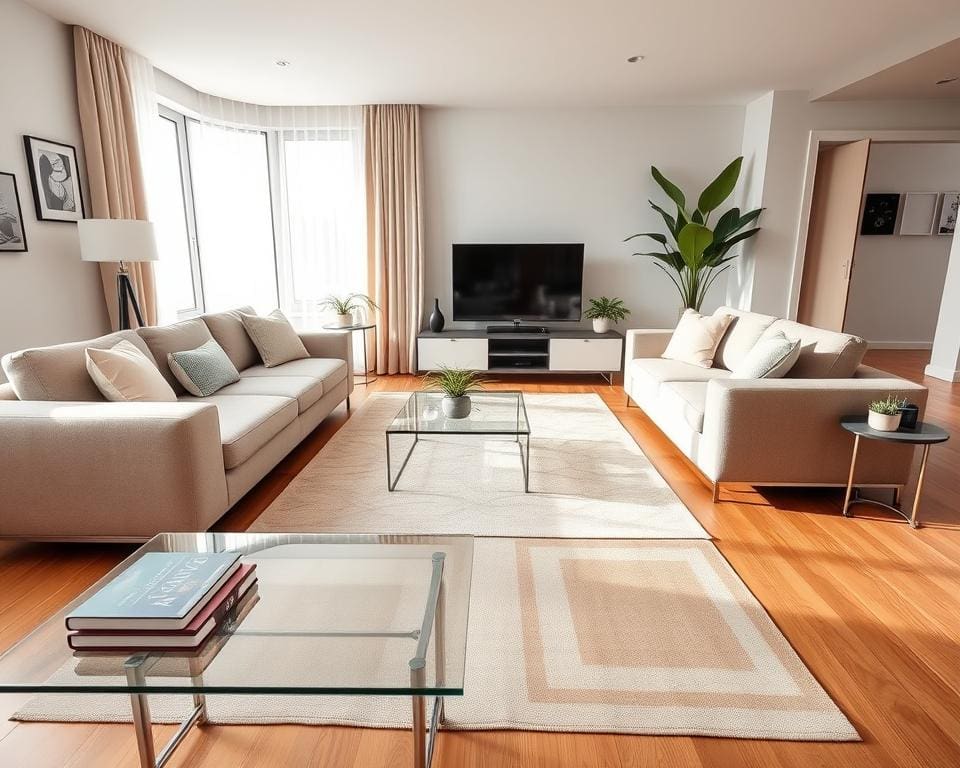
Choose a rug big enough to anchor the seating area so front legs of sofas and chairs sit on it. Common UK sizes include 160x230cm for small rooms and 200x300cm for medium layouts.
Select modern coffee tables that follow the two-thirds sofa-width rule and sit 40–50cm in height. Consider mixed materials, such as oak tops with metal legs, to add contrast and durability.
Integrate living room storage ideas with low-profile media units, sideboards or concealed baskets. Keep surfaces curated—limit items on the coffee table to a book, a tray and a small vase to preserve a minimalist look.
For practical guidance on sizing and style, consult this short guide on what furniture fits your space: what living room furniture fits your.
Lighting, textures and decor to elevate your space
Start by thinking of lighting, texture and decor as layers that work together. Good living room lighting ideas set the mood, highlight features and make everyday tasks easier. Textured interiors add depth while carefully chosen modern decor accessories bring personality without clutter.
Layered lighting
Begin with ambient light from a central ceiling fixture or recessed downlights on dimmers to provide a flexible base. Use warm white bulbs (2700–3000K) for relaxed evenings and cooler whites where you read or work.
Add task lighting with an Anglepoise-style desk lamp, an arc floor lamp beside a reading chair or a table lamp on a side table. These options give you focused beams for hobbies and reading without overlighting the room.
Include accent lighting to draw attention to art, shelves or architectural details. Picture lights, LED strips behind shelving and adjustable spotlights add drama. Smart systems such as Philips Hue or Lutron Caseta let you change scenes and colour temperature with ease.
Mixing textures
Layer soft fabrics like linen, wool and velvet over harder surfaces such as timber, brass and glass to create contrast you can feel. A velvet cushion or wool throw warms a leather sofa and invites touch.
Balance engineered oak or polished concrete floors with textured rugs to prevent a room feeling cold. Match metal finishes across lighting, furniture legs and hardware for a cohesive look. Pick easy-care textiles for high-use spots and consider stain-resistant treatments where needed.
Artwork and accessories
Choose one large-scale piece or a curated gallery wall to give the room a focal point. Look to contemporary British artists and fine prints from respected galleries for pieces that hold value and spark conversation. Artwork for modern spaces works best when paired with minimal frames and simple lighting.
Keep accessories purposeful: a single sculpture, a neat stack of books or a ceramic vase can be more effective than many small objects. Use mirrors to bounce light and create a sense of scale; a leaning framed mirror adds instant depth.
Greenery and natural elements
Introduce indoor plants living room-friendly choices such as Monstera, Ficus lyrata, snake plant and ZZ plant to add life and improve air quality. Choose terracotta, ceramic or metal planters that complement your palette.
Bring in wood, stone and woven fibres like rattan or seagrass to soften modern finishes. These natural touches create warmth and a tactile contrast that makes textured interiors feel lived-in and inviting.
Practical tips and trends for creating your contemporary space
Start with a clear plan: measure your room carefully and mark door swings, radiators and plug sockets. Use online room planners or retailer AR apps from John Lewis & Partners or Made.com to test layouts. For compact living solutions, sketch a measured floor plan and consider modular seating or multi-zoned arrangements so each square metre works harder.
Follow current modern living room trends 2026 by choosing rounded furniture profiles, sculptural silhouettes and curved sofas in tactile velvets. Pair richer accent colours such as deep green, navy or terracotta with neutral anchors. Invest in a durable sofa and essential storage, then refresh the room with accessories; this approach keeps costs down while staying stylish.
Prioritise sustainable furniture UK options where you can. Look for FSC certification, reclaimed timber and UK-based makers to lower your carbon footprint. Reupholster or upcycle solid pieces rather than replacing them, and select stain-resistant fabrics or removable covers for easy maintenance. These measures support longevity and align with contemporary living room tips focused on eco-conscious choices.
Integrate smart home integration subtly: link lighting, blinds and heating to systems that meet UK electrical standards and use professional installation when needed. Before purchase, check delivery dimensions and building access, and consider white-glove delivery for bulky items. Finish by confirming scale, sightlines and at least one clear walkway so your modern living room feels comfortable, functional and ready to adapt over time.