What makes a traditional Spanish paella authentic? For many people in the UK, paella means a colourful rice dish with prawns, mussels and perhaps a wedge of lemon. In Spain, and especially in Valencia, authenticity is much more specific. It is about place, rice, pan, heat, ingredients and restraint. A true paella is not simply “rice with things in it”. It is a carefully balanced dish where every part has a job.
The Valencian roots of authentic paella
Paella comes from Valencia, on Spain’s eastern coast. Its origins are rural rather than restaurant-led. It was traditionally cooked outdoors in a wide, shallow pan, often for family or workers sharing a meal. The surrounding landscape shaped the dish: rice fields, vegetables, olive oil, poultry, rabbit and local beans all played a part.
This matters because authenticity is not only about following a recipe. It is about understanding why the dish developed as it did. Valencian paella was practical, seasonal and communal. It used ingredients available nearby and cooked them in a way that made the rice the centre of the meal.
Over time, paella travelled across Spain and beyond. Seafood versions became popular, especially along the coast and in tourist areas. Mixed paellas with meat and seafood also appeared. Some are delicious, but they are not always traditional in the strict Valencian sense.
That does not mean only one paella is worth eating. It means the word “authentic” needs care. If you are asking about traditional Spanish paella, the most historically grounded answer begins in Valencia.
What makes a traditional Spanish paella authentic?
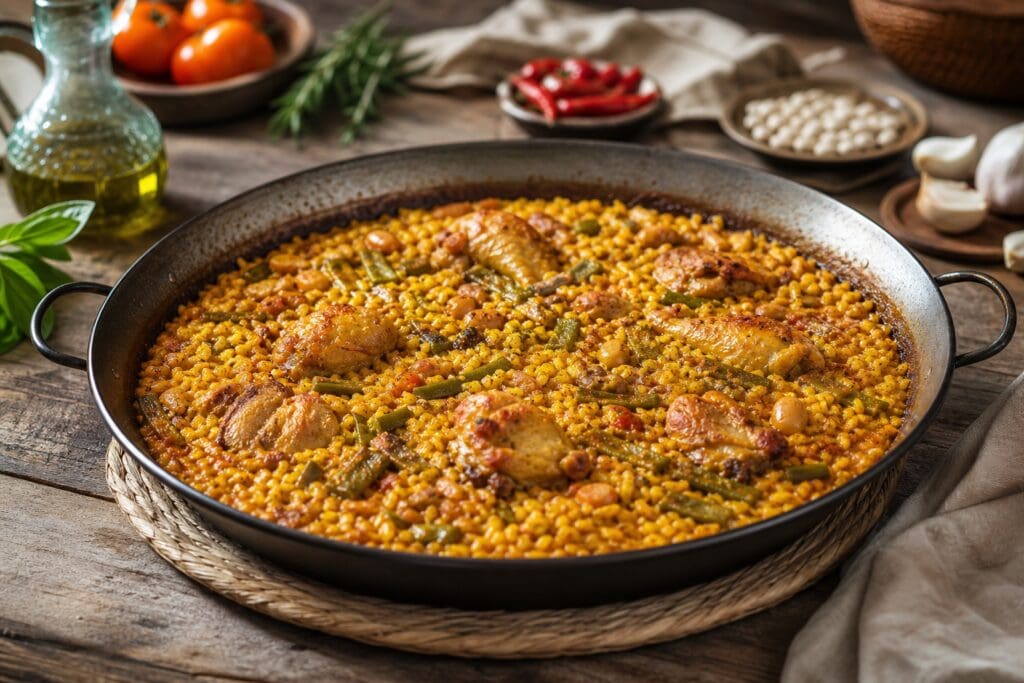
At its heart, authentic paella is defined by balance. The rice should absorb a savoury stock, the ingredients should flavour the dish without overwhelming it, and the texture should be dry rather than creamy. Unlike risotto, paella is not stirred continuously. Unlike a pilaf, it aims for a distinctive toasted base.
Several features separate a traditional paella from a general rice dish:
- Short-grain rice: It absorbs flavour while keeping structure.
- A wide, shallow pan: This encourages even cooking and evaporation.
- A thin layer of rice: Paella should not be piled deep.
- Careful heat control: The liquid must reduce at the right pace.
- No constant stirring: Once the rice is added, it is usually left alone.
- A savoury base: Meat, vegetables, oil, tomato and seasoning build depth.
- A lightly crisp bottom: The prized toasted layer adds flavour and texture.
Authenticity also involves knowing what to leave out. Too many toppings can distract from the rice. Heavy sauces, cream, chorizo, long-grain rice or a wet, soupy finish move the dish away from tradition.
The rice is the real star
In a proper paella, rice is not a background ingredient. It is the main event. Spanish short-grain rice is preferred because it absorbs liquid well while staying firm enough to hold its shape. The grains should be separate, tender and full of flavour.
The finished dish should be dry, not creamy. If it looks like a stew, it has too much liquid. If it feels sticky and heavy, it may have been stirred too much or made with the wrong type of rice.
The rice layer should be relatively thin across the pan. This helps each grain cook evenly and allows the bottom to toast. A deep pan or thick rice layer makes it harder to achieve the classic texture.
The pan changes the dish
The pan used for paella is wide, round and shallow. In Spanish cooking, the pan itself gives the dish its name. Its shape is not decorative; it is essential.
A wide pan allows liquid to evaporate quickly and evenly. It also creates more surface area for the rice to develop that golden, lightly crisp base. A deep saucepan traps steam and gives a very different result.
For home cooks in the UK, a specialist paella pan can help, but the principle matters more than the label. A broad, shallow pan is closer to tradition than a narrow, deep pot. The rice needs space.
Traditional ingredients and what they tell you
The most traditional Valencian version is based on land ingredients rather than seafood. Chicken and rabbit are common, along with flat green beans, broad white beans, tomato, olive oil, water, saffron and salt. Some versions include snails or rosemary, depending on local custom and availability.
This can surprise people who associate paella mainly with shellfish. Seafood paella is a recognised and popular style, but it is not the original rural Valencian form. The difference is not about quality; it is about category.
A traditional paella should taste clean and savoury. Saffron brings aroma and colour, but it should not be harsh or artificial. Tomato adds sweetness and depth. Olive oil carries flavour. The meat or seafood should season the rice, not sit on top as decoration alone.
Common ingredients that often signal a less traditional approach include:
- Chorizo: Popular in some British versions, but not part of classic Valencian paella.
- Cream or butter: These change the texture and move the dish towards richness rather than clarity.
- Long-grain rice: It does not absorb and release flavour in the same way.
- Too many mixed proteins: Chicken, sausage, prawns, mussels and squid together can feel confused.
- Excessive garnish: Paella is not meant to be hidden under toppings.
Lemon is another interesting point. It is often served with paella, especially outside Valencia, but squeezing it over the dish can mask subtle flavours. Some people enjoy it, yet it is not what makes the paella authentic.
Technique matters as much as the recipe
A paella can contain the right ingredients and still miss the mark if the method is wrong. The cooking process builds flavour in stages.
First, the meat or seafood is browned in olive oil. Then vegetables and tomato are cooked down to form a savoury base. Water or stock is added, and the rice is spread evenly across the pan. From that point, the rice is generally left undisturbed.
This stillness is important. Stirring releases starch and creates a creamy texture, which belongs more to risotto than paella. Paella relies on absorption and evaporation. The cook watches the heat, listens to the pan and judges when the liquid has nearly gone.
Towards the end, the base should toast lightly. This crisp layer should taste nutty and savoury, not burnt. Achieving it takes practice, because too much heat can scorch the rice before the top is cooked.
Resting is also part of the process. After cooking, paella is often left for a few minutes before serving. This helps the texture settle and makes the rice more even.
Regional variety without losing authenticity
Spain has many rice dishes, and paella has many interpretations. Seafood paella, vegetable paella and other regional styles can be authentic in their own contexts when made with respect for rice, pan and technique.
The problem comes when every colourful rice dish is called traditional paella. Authenticity depends on honesty. A seafood paella can be genuine as a seafood version. A Valencian paella has a more specific ingredient tradition. A mixed party-style paella may be enjoyable, but it should not be presented as the original form.
For UK consumers, this distinction is useful when reading menus or recipes. If a dish claims to be traditional Valencian paella but contains chorizo, peas and prawns, it is probably using “traditional” loosely. If it describes itself as a modern or seafood paella, the expectations are different.
Authenticity should not remove pleasure from food. It should deepen it. Knowing the tradition helps you understand why a simpler paella can taste more complete than one overloaded with expensive ingredients.
How to recognise a more authentic paella
When choosing or judging a paella, look beyond colour. Bright yellow rice does not guarantee saffron, and a pan full of shellfish does not guarantee tradition. Texture, aroma and proportion tell you more.
A more authentic paella will usually have rice that is evenly cooked, separate and deeply flavoured. The ingredients will feel integrated rather than scattered on top. The pan will be wide enough for a thin rice layer. The taste will be savoury, rounded and direct.
You can also ask what style it is meant to be. Valencian, seafood and vegetable paellas each have their own logic. A clear answer is often a good sign. Vague descriptions can suggest the dish is more of a general interpretation.
Authentic paella does not need to be fancy. In fact, restraint is one of its strengths. The finest versions often look quite simple: rice, a few well-chosen ingredients, and a beautifully judged base.
Frequently Asked Questions
Is seafood paella traditional?
Seafood paella is a well-established style, especially in coastal areas, but it is not the original Valencian rural version. Traditional Valencian paella is usually based on meat, beans, rice, olive oil, tomato and saffron.
Should authentic paella contain chorizo?
Chorizo is not considered part of classic Valencian paella. It may taste good in a separate rice dish, but its smoky, spicy flavour can dominate the more delicate balance expected in traditional paella.
What rice should be used for paella?
Short-grain Spanish rice is best because it absorbs flavour while keeping a firm texture. The aim is tender, separate grains, not the soft creaminess associated with risotto or the looseness of boiled rice.
Why is paella not stirred like risotto?
Paella is left mostly unstirred so the rice can absorb liquid evenly and form a lightly toasted base. Stirring releases starch, changes the texture and prevents the classic dry finish from developing properly.
Can authentic paella be made at home in the UK?
Yes, authentic-style paella can be made at home if you respect the main principles. Use suitable short-grain rice, a wide shallow pan, balanced ingredients and careful heat rather than relying on heavy toppings.