From Stilton to Cheddar: iconic British cheeses to try is more than a list of familiar names. Britain has a deep cheese-making tradition, shaped by regional landscapes, local milk, ageing methods and long-standing recipes. Some cheeses are bold and blue, others are mellow, crumbly, buttery or sharp. Together, they show how varied British cheese can be, whether served on a cheeseboard, melted into comfort food or paired with fruit, pickles and bread.
From Stilton to Cheddar: iconic British cheeses to try by style
British cheese is often best understood by texture and flavour. A hard cheese such as Cheddar gives structure and depth, while a blue cheese such as Stilton brings salt, richness and savoury intensity. Softer and washed-rind cheeses add creaminess, aroma and character.
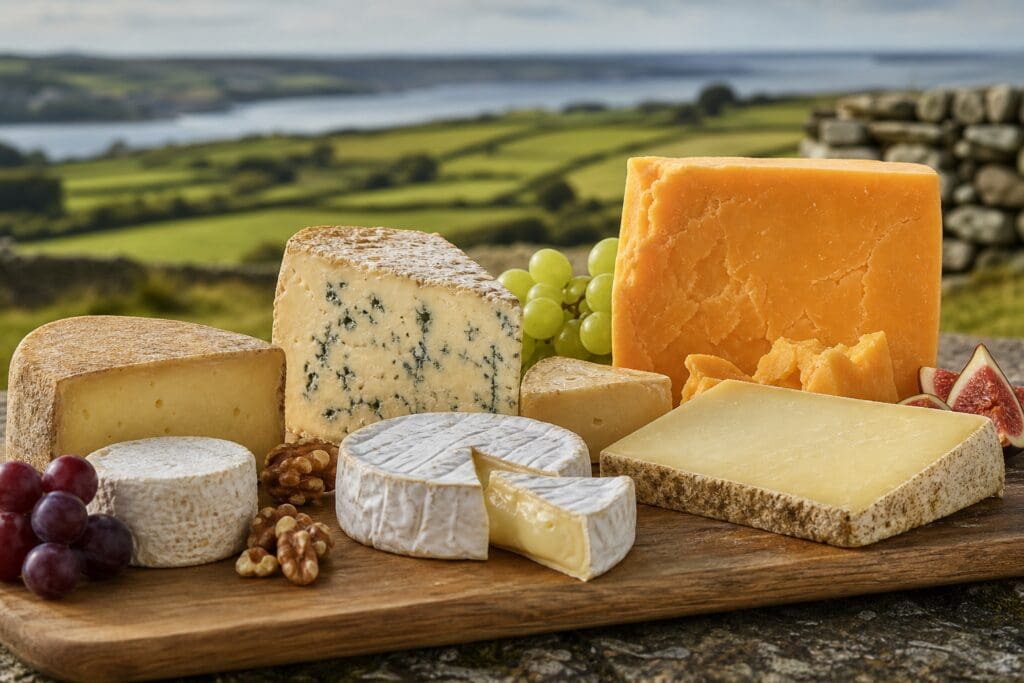
A good British cheeseboard usually balances several styles. It may include a firm cheese, a blue cheese, something crumbly, something mellow and a stronger option for contrast. That balance makes each cheese more enjoyable, because no single flavour dominates the plate.
Here are useful styles to recognise:
- Hard and firm cheeses: Cheddar, Red Leicester and Double Gloucester are reliable, sliceable and often excellent for cooking.
- Blue cheeses: Stilton, Dorset Blue Vinny and Shropshire Blue offer savoury depth and a distinctive tang.
- Crumbly cheeses: Cheshire, Lancashire, Wensleydale and Caerphilly bring freshness, acidity and a pleasing break in texture.
- Soft or washed-rind cheeses: Stinking Bishop and other aromatic cheeses are creamy, bold and memorable.
- Regional specialities: Cornish Yarg, Yorkshire Wensleydale and Single Gloucester reflect particular local traditions.
The classics: Cheddar, Stilton and Red Leicester
Cheddar: Britain’s everyday icon
Cheddar is probably the best-known British cheese, with roots linked to the village of Cheddar in Somerset. Its popularity comes from its range. Young Cheddar is smooth, creamy and gentle, while mature Cheddar becomes sharper, nuttier and more savoury. Extra mature versions can have a pleasant crystalline crunch, formed during ageing.
Cheddar works well in almost every setting. It slices neatly for sandwiches, melts well in toasties, strengthens a cheese sauce and brings depth to a baked potato. On a cheeseboard, mature Cheddar is best served at room temperature, where its full flavour can develop.
Pair it with apples, oatcakes, chutney or pickled onions. For drinks, traditional cider, ale or a full-bodied red wine can all suit mature Cheddar, depending on the strength of the cheese.
Stilton: the king of British blue cheese
Stilton is rich, creamy, salty and complex, with blue veining running through a pale, crumbly body. Blue Stilton has protected status and is made in specific counties under set rules. Its flavour is bold without being harsh when well balanced, which is why it remains a favourite for festive cheeseboards and special occasions.
Stilton is often served with pears, figs, walnuts or fruit cake. It also works beautifully in soups, sauces and savoury tarts, where its strength can season a dish without needing much extra salt.
There is also White Stilton, a milder cheese without blue veining. It is often paired with fruit, although Blue Stilton remains the better-known classic.
Red Leicester: mellow, nutty and colourful
Red Leicester is a firm cow’s milk cheese known for its warm orange colour and gentle nuttiness. It is usually less sharp than mature Cheddar, with a rounded flavour and smooth texture. That makes it a friendly choice for people who enjoy firm cheese but prefer less acidity.
It is excellent grated over baked dishes, sliced into rolls or served with crackers and chutney. Its colour also brings visual warmth to a cheeseboard, especially beside pale cheeses and blue varieties.
Crumbly regional favourites worth knowing
British crumbly cheeses are often bright, fresh and slightly tangy. They suit simple food: crusty bread, tomatoes, celery, pickles and fruit. Their texture also makes them good for crumbling over salads, soups or roasted vegetables.
Cheshire: clean, bright and one of the oldest styles
Cheshire cheese is a traditional crumbly cheese with a fresh, lactic tang. It can be white, coloured or blue, although the plain white version is the most widely recognised. Its texture is moist but crumbly, and its flavour is clean rather than heavy.
It pairs well with plain crackers, fresh vegetables and pale ales. Because it is not overly rich, Cheshire can be especially pleasant in warmer months or as part of a lighter lunch.
Lancashire: creamy, crumbly or tasty
Lancashire cheese comes in more than one style. Crumbly Lancashire is fresh and mild, while creamy Lancashire is smoother and richer. Tasty Lancashire is matured for longer, giving it more depth and a stronger savoury edge.
This variety makes Lancashire useful in the kitchen. It melts well, particularly in traditional dishes such as cheese on toast or savoury pies. Its balance of tang and creaminess means it can feel comforting without being too heavy.
Wensleydale: fresh, delicate and slightly sweet
Wensleydale is closely associated with Yorkshire, especially Yorkshire Wensleydale. It has a pale colour, a crumbly texture and a clean, slightly honeyed flavour. While many people know versions with cranberries or other fruit, plain Wensleydale is worth tasting for its gentle character.
It pairs well with fruit, especially apples and pears, and it can be served with light biscuits or oatcakes. Its delicate flavour also makes it a good contrast to stronger cheeses such as Stilton.
Caerphilly: a Welsh favourite with a lively edge
Caerphilly is a traditional Welsh cheese, usually pale, crumbly and lightly tangy. It was historically valued as a practical cheese, and today it remains loved for its fresh acidity and approachable flavour.
A good Caerphilly has a firm centre and a slightly softer texture nearer the rind. It is excellent with pickles, crusty bread and crisp salad ingredients. On a cheeseboard, it brings freshness between richer options.
Distinctive British cheeses with character
Beyond the household names, Britain has many cheeses with strong regional identities. These are often the ones that make a cheeseboard feel more personal and interesting.
Cornish Yarg is wrapped in nettle leaves, giving it a distinctive appearance and a subtle earthy note. The rind is part of its charm, while the centre is creamy, slightly crumbly and gentle.
Double Gloucester is a smooth, buttery cheese from Gloucestershire tradition. It is firmer and richer than many crumbly cheeses, with a mellow flavour that suits both cheeseboards and cooking. Single Gloucester, a related cheese with protected status, is usually lighter in body.
Dorset Blue Vinny is a traditional blue cheese from Dorset. It tends to be firmer and more crumbly than Stilton, with a sharper, saltier profile. It is particularly good with rustic bread and chutney.
Stinking Bishop is famous for its strong aroma. It is a washed-rind cheese from Gloucestershire, known for its soft texture and pungent rind. The smell can be powerful, but the flavour is often more rounded than expected. It is a cheese for people who enjoy bold, savoury character.
Shropshire Blue, despite its name, is commonly associated with British blue cheese-making rather than a single simple origin story. It has a bright orange body and blue veining, with a creamy texture and a rich, savoury flavour. It sits well between mellow firm cheeses and stronger blues.
How to serve and enjoy British cheese
Serving cheese well does not require elaborate preparation. Small details make the biggest difference. Cheese tastes better when it is not fridge-cold, because the texture softens and the flavour becomes clearer. Remove it from the fridge in advance, while keeping food safety in mind.
A balanced plate should include contrast. Too many strong cheeses can be tiring, while too many mild cheeses can feel flat. Mix textures, strengths and colours for a more enjoyable selection.
Useful accompaniments include:
- Bread and biscuits: sourdough, oatcakes, water biscuits and rye crackers each bring different texture.
- Fruit: apples, pears, grapes and figs add freshness and sweetness.
- Pickles and chutneys: sharp or fruity preserves cut through richness.
- Nuts: walnuts, hazelnuts and almonds add crunch and gentle bitterness.
- Simple vegetables: celery, radishes and cherry tomatoes lighten the plate.
When cutting cheese, use separate knives where possible, especially for blue or pungent varieties. This stops stronger flavours spreading to milder cheeses. Arrange cheeses from mild to strong, so the palate can build gradually.
For cooking, match the cheese to the dish. Cheddar is ideal for sauces, gratins and toasties. Stilton suits soups, steaks and creamy pasta sauces. Lancashire melts beautifully, while Red Leicester adds colour as well as flavour.
Building a British cheeseboard
A well-rounded British cheeseboard does not need to be large. Three to five cheeses are usually enough for variety without waste. Think of it as a set of contrasts rather than a competition for the strongest flavour.
A classic selection might include mature Cheddar, Stilton, Wensleydale, Red Leicester and a soft washed-rind cheese. For a lighter board, choose Caerphilly, Cheshire and Cornish Yarg. For a bolder board, combine Stilton, Dorset Blue Vinny, mature Cheddar and Stinking Bishop.
Portion size depends on whether cheese is part of a meal or served after one. As a general guide, smaller portions work well after dinner, while more generous amounts suit a casual lunch with bread, salad and pickles.
Storage also matters. Keep cheese wrapped in suitable cheese paper, waxed paper or loosely wrapped baking parchment, then place it in a container in the fridge. Avoid leaving cheese tightly sealed in plastic for long periods, as it can trap moisture and affect flavour. Blue and pungent cheeses should be kept well wrapped so their aroma does not spread.
Frequently Asked Questions
What is the most famous British cheese?
Cheddar is widely regarded as the most famous British cheese, both in the UK and internationally. It is popular because it is versatile, widely available and made in many strengths, from mild to extra mature.
Is Stilton always a blue cheese?
No. Blue Stilton is the famous veined version, but White Stilton also exists. White Stilton is milder and does not have the same blue veining or strong savoury flavour as Blue Stilton.
Which British cheese is best for a cheeseboard?
A mature Cheddar, a blue Stilton, a crumbly Wensleydale and a characterful regional cheese create a balanced British cheeseboard. The best choice depends on whether you prefer mild, sharp, creamy or pungent flavours.
What should I serve with British cheese?
British cheese goes well with oatcakes, crusty bread, apples, pears, chutney, pickles and nuts. The aim is to balance richness with freshness, acidity, sweetness or crunch, rather than overwhelming the cheese itself.
Can British cheeses be used in everyday cooking?
Yes, many British cheeses are excellent for cooking. Cheddar melts into sauces, Lancashire works well on toast, Stilton enriches soups, and Red Leicester adds colour and gentle nuttiness to baked dishes.