Afternoon tea feels comfortingly British: a pot of tea, neat sandwiches, warm scones and a slice of cake. Yet The surprising history of afternoon tea in Britain is not as old, simple or cosy as many people imagine. It is a story of global trade, aristocratic habits, changing meal times, women’s social lives, wartime rationing and hotel glamour.
Why tea became a British obsession before afternoon tea existed
Tea arrived in Britain long before the ritual of afternoon tea. In the 17th century, it was an expensive imported drink, linked with court circles, merchants and fashionable households. Catherine of Braganza, the Portuguese wife of King Charles II, is often associated with helping tea become fashionable at court. At the time, tea was still a luxury rather than an everyday comfort.
Its journey to the British table was shaped by international trade, especially with China. Tea, porcelain and sugar were part of a wider world of goods that transformed domestic life. The British taste for sweetened tea also tied the drink to the history of sugar, empire and colonial trade, a less cosy part of the story that sits behind the china cup.
For much of the 18th century, high taxes made tea costly. Smuggling became common, and cheaper adulterated tea sometimes reached customers. Later tax changes helped tea become more affordable, and by the 19th century it had moved far beyond elite drawing rooms. Workers, shopkeepers and families across Britain drank tea because it was warming, practical and familiar.
Still, this was not yet afternoon tea as we recognise it today. People drank tea at different times of day, often with bread, butter or something sweet. The formal afternoon ritual would develop later, in a particular social setting.
The surprising history of afternoon tea in Britain begins with a hungry duchess
The most familiar origin story points to Anna Maria Russell, the 7th Duchess of Bedford, in the early Victorian period. At the time, upper-class households often ate dinner quite late in the evening. With a long gap between lunch and dinner, the duchess is said to have asked for tea, bread and butter, and small cakes in the afternoon.
This simple solution to hunger became a social habit. She began inviting friends to join her, including during stays at Woburn Abbey. What started as a private refreshment grew into a fashionable occasion. It suited the rhythms of aristocratic life: there was time to dress, talk, display good manners and enjoy carefully prepared food.
The idea spread through fashionable society during the 1840s. Queen Victoria’s era gave afternoon tea its distinctive social polish. It became associated with etiquette, fine china, drawing rooms and neatly arranged tables. The ritual was not only about food and drink; it was about sociability, status and taste.
This is one reason afternoon tea can seem older than it is. Britain had loved tea for generations, but the formal mid-afternoon spread of sandwiches, cakes and scones is mainly a Victorian development. Its “tradition” is real, but it was invented within a modernising 19th-century world.
What Victorian afternoon tea looked like
Victorian afternoon tea was more delicate than the hearty “tea” many families later ate in the early evening. It was served on low tables in sitting rooms, which is why it is sometimes called “low tea”. The emphasis was on light food, elegant service and conversation.
Sandwiches, cakes and the art of small portions
The food was meant to be attractive and manageable. Thin bread, dainty fillings and small cakes allowed guests to eat politely while talking. Cucumber sandwiches became especially associated with refinement, not because they were filling, but because they signalled freshness, leisure and the ability to serve delicate food for pleasure rather than necessity.
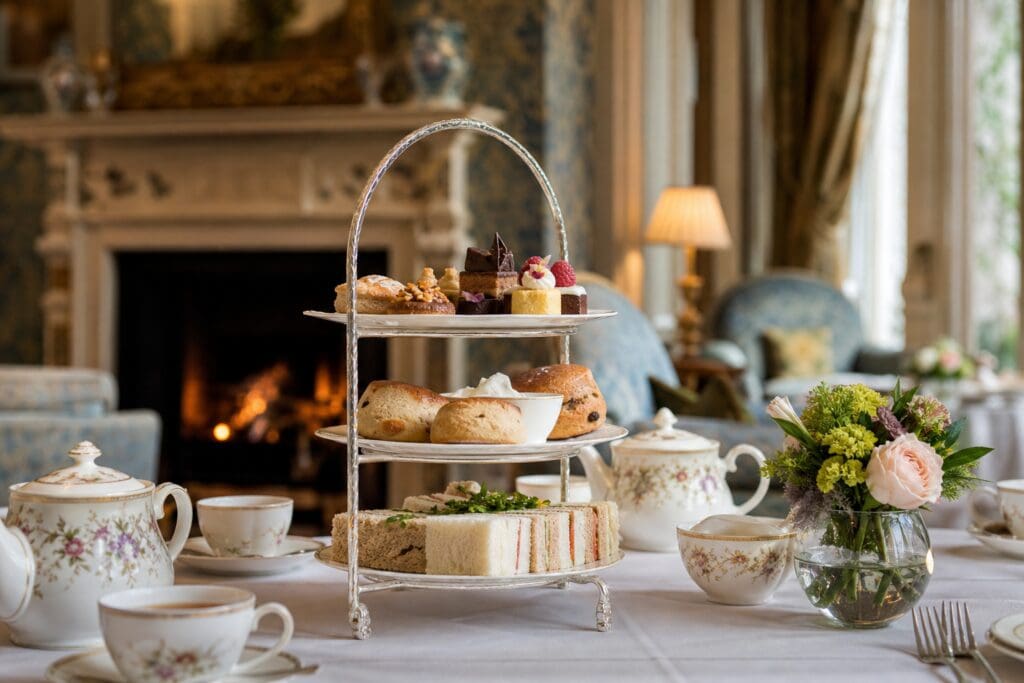
The familiar tiered stand is now strongly linked with afternoon tea, although service styles varied. What mattered was the sense of abundance in miniature: small sandwiches, something baked, something sweet, and plenty of tea.
Common elements came to include:
- Finger sandwiches with fillings such as cucumber, egg, smoked salmon or ham.
- Scones served with jam and clotted cream, especially in regional and hotel traditions.
- Cakes, pastries or buns, often cut small enough to be eaten neatly.
Scones are now central to many afternoon teas, but they did not always dominate the earliest versions. Their role grew as the ritual evolved, particularly through hotel service, tearoom menus and regional influences.
The tea table as a social stage
Afternoon tea gave women in polite society a recognised way to host and visit without the formality of dinner. The tea table was a stage for conversation, dress, manners and household taste. Good china, silver strainers, linen and careful presentation all mattered.
The tea gown also became part of this world. In the late 19th century, it offered a more relaxed garment for women at home than strict daywear, while still being elegant enough for receiving guests. That detail shows how afternoon tea sat between private comfort and public performance.
Etiquette books helped define expectations. How to pour tea, when to add milk, how to eat a scone and how to behave as a guest could all carry social meaning. Today, many of these rules feel charming rather than compulsory, but in Victorian society they could mark class and confidence.
Afternoon tea, high tea and a common confusion
One of the most common misunderstandings is the difference between afternoon tea and high tea. In everyday speech, people sometimes use “high tea” to mean a posh afternoon tea. Historically, the terms were different.
Afternoon tea was the lighter, upper-class or middle-class social meal served in the afternoon. High tea was more substantial and often linked with working households. It might include bread, cheese, meat, pies, eggs or other filling dishes, served at a proper table after the working day.
The word “high” is usually understood as referring to the higher dining table rather than higher social status. “Low tea” was taken at low drawing-room tables; “high tea” was eaten at the main table.
This distinction is not always observed today. Many hotels and cafés use language flexibly, and regional habits vary. In parts of the UK, “tea” still means the evening meal. For some families, “What’s for tea?” has nothing to do with cake stands or china cups. That is part of the richness of British food language: the same word can mean a drink, a snack, a meal or a ceremony.
From drawing rooms to tearooms, hotels and the high street
By the late 19th and early 20th centuries, afternoon tea moved beyond aristocratic homes. Tearooms made the experience more public and accessible, especially for middle-class customers. They also offered respectable places where women could meet outside the home, at a time when many public venues were still male-dominated.
Tearoom culture changed British towns and cities. Department stores served tea to shoppers. Railway hotels and grand London hotels helped turn afternoon tea into a polished hospitality experience. The Ritz in London, opened in 1906, became especially associated with luxurious afternoon tea, although it was part of a wider hotel culture rather than the sole inventor of the tradition.
Catering companies and tea shops also made tea part of ordinary urban life. Places such as Lyons Corner Houses, which expanded in the early 20th century, brought affordable refreshments to a broad public. Their world was different from the duchess’s drawing room, but the appeal was related: warmth, sociability and a pause in the day.
Afternoon tea became adaptable. It could be elegant or simple, homemade or commercial, celebratory or everyday. That flexibility helped it survive changes in work, transport, shopping and leisure.
War, rationing and the survival of a ritual
The 20th century challenged the old afternoon tea. Two world wars, economic hardship and rationing changed what people could buy and serve. Tea itself was rationed during the Second World War and remained rationed in Britain until 1952. Sugar, butter and other ingredients were also restricted at different times, making cakes and rich pastries harder to produce.
Yet tea remained emotionally important. A cup of tea stood for normality, comfort and resilience. During air raids, factory shifts and military service, tea was practical and symbolic. It did not need a tiered stand to matter.
After the war, domestic life changed again. Convenience foods, tea bags and changing work patterns reshaped habits. The full afternoon tea became less of a daily custom and more of an occasional pleasure. Many people still drank tea every day, but fewer households laid out sandwiches, scones and cakes in the old formal style.
By the later 20th century, afternoon tea had become strongly linked with treats, birthdays, hotels, heritage venues and days out. It was no longer simply a social requirement. It became a way to enjoy a carefully preserved version of the past.
Why afternoon tea still feels special today
Modern afternoon tea is both traditional and inventive. Classic versions still feature finger sandwiches, scones, jam, cream and cakes. At the same time, menus may include savoury pastries, seasonal bakes, themed patisserie or different tea pairings. Some venues offer vegetarian, vegan or gluten-free versions, reflecting contemporary tastes.
Part of its appeal lies in the contrast with everyday life. Afternoon tea asks people to slow down. The portions are small, but the occasion feels generous. It turns familiar ingredients into ceremony: bread becomes finger sandwiches, cream becomes a debate, and tea becomes the centrepiece.
There is also nostalgia, though not always for a real personal memory. Afternoon tea evokes an imagined Britain of polished pots, quiet rooms and unhurried conversation. That image can be selective, but it has cultural power. It appears in films, novels, hotels and tourist experiences because it is instantly recognisable.
The surprising truth is that afternoon tea has never been fixed. It has moved from elite homes to public tearooms, from wartime austerity to luxury hotels, from cucumber sandwiches to creative patisserie. Its history is not a straight line from “old England” to the present. It is a changing ritual shaped by trade, class, gender, work and pleasure.
Frequently Asked Questions
Who invented afternoon tea in Britain?
Afternoon tea is most often credited to Anna Maria Russell, the 7th Duchess of Bedford. In the early Victorian period, she helped popularise the habit of taking tea and light food in the afternoon, especially among fashionable society.
Is afternoon tea the same as high tea?
No, historically they were different meals. Afternoon tea was lighter and more social, often served in drawing rooms. High tea was usually more substantial, eaten at a dining table, and was closer to an early evening meal.
Why are cucumber sandwiches linked with afternoon tea?
Cucumber sandwiches became associated with refinement because they were delicate, fresh and not especially filling. Serving them suggested leisure, elegance and access to good-quality ingredients rather than the need for a hearty meal.
When did afternoon tea become popular outside aristocratic homes?
It spread more widely in the late 19th and early 20th centuries through tearooms, department stores and hotels. These venues made the ritual more accessible to middle-class customers and gave women respectable public places to meet.
Does traditional afternoon tea always include scones?
Not always in its earliest forms, but scones are now a familiar part of many traditional afternoon teas. Today, they are commonly served with jam and clotted cream, although regional customs and personal preferences vary.