Why is truffle such a prized ingredient in fine dining? The short answer is that it offers a rare combination of intense aroma, seasonal scarcity, culinary drama and deep tradition. A few delicate shavings can change the mood of a dish completely, adding an earthy, savoury richness that feels unmistakably luxurious. For chefs, truffle is not just an ingredient; it is a finishing touch that signals care, craft and occasion.
Why is truffle such a prized ingredient in fine dining?
Truffles are valued because they are difficult to find, highly seasonal and remarkably aromatic. Unlike common mushrooms, truffles grow underground, usually near the roots of particular trees. They cannot simply be picked from a shelf of woodland fungi. They must be located with skill, patience and, often, the help of trained dogs.
Their appeal also comes from their flavour profile. Truffle has a deep, musky, nutty and earthy scent, with savoury notes that can remind people of aged cheese, garlic, forest floor or roasted nuts. It is hard to describe because much of the pleasure comes through smell rather than taste alone.
In fine dining, aroma matters greatly. A dish arrives at the table, and before the first bite, the guest experiences its scent. Truffle works beautifully in this moment. Its perfume rises from warm pasta, risotto, eggs, butter or creamy sauces, creating a sense of theatre without needing loud presentation.
Truffle is prized because it feels both natural and extravagant. It comes from the soil, yet it behaves like a luxury seasoning. That contrast is part of its charm.
What exactly is a truffle?
A truffle is the fruiting body of a fungus that grows beneath the ground. It forms in a relationship with the roots of certain trees, such as oak, hazel, beech and poplar. This connection with trees and soil is one reason truffles are so closely linked to place.
They are not all the same. Different species have different aromas, seasons and culinary uses. Some are bold and pungent, while others are more gentle. Some are usually served raw, while others can cope better with mild heat.
Black truffles
Black truffles are often associated with cooked or gently warmed dishes. They can have a rounded, earthy aroma with notes that feel nutty, woody and savoury. In fine dining, they are often paired with butter, poultry, potatoes, pasta, risotto, eggs and sauces.
Their appeal lies in balance. A black truffle can support a dish without overwhelming it, especially when used with ingredients that carry fat. Butter, cream and egg yolk help hold and spread truffle aroma, making each mouthful feel richer.
White truffles
White truffles are usually considered more delicate in the kitchen, even when their fragrance is powerful. They are commonly shaved raw over warm food just before serving. Heat can dull their perfume, so chefs treat them with care.
Their aroma is distinctive, penetrating and complex. Because of that, white truffles are often paired with simple dishes: fresh pasta, risotto, soft eggs or plain buttered potatoes. The point is not to hide the truffle, but to give it a quiet stage.
The rare nature of truffles
Rarity is central to truffle’s luxury status. Truffles grow underground and depend on soil, climate, tree roots and seasonal conditions. Even in suitable regions, they do not appear on command. A promising area may produce well one year and poorly another.
This uncertainty affects how truffles are sourced and priced. They must be found at the right moment, handled carefully and used quickly. Their aroma fades after harvest, so freshness is a major part of their value.
Several factors make truffles rare and desirable:
- They are hard to locate: Because they grow underground, they require skilled hunters and trained animals.
- They are seasonal: Availability changes through the year, and peak quality is limited.
- They are perishable: Their fragrance is strongest when fresh, so storage time is short.
- They depend on place: Soil, trees and weather all influence growth and aroma.
- They vary naturally: Size, shape, scent and quality differ from one truffle to another.
This natural unpredictability creates anticipation. When truffle season arrives, restaurants can build menus around something that feels fleeting. Guests know they are experiencing an ingredient at a particular moment, not a standard product available every day.
Flavour, aroma and the science of pleasure
Truffle’s power lies mostly in its aroma. When we eat, smell and taste work together. The tongue detects broad tastes such as saltiness, sweetness and bitterness, but the nose identifies much of what we call flavour. Truffle is especially effective because its volatile aromatic compounds rise easily from warm food.
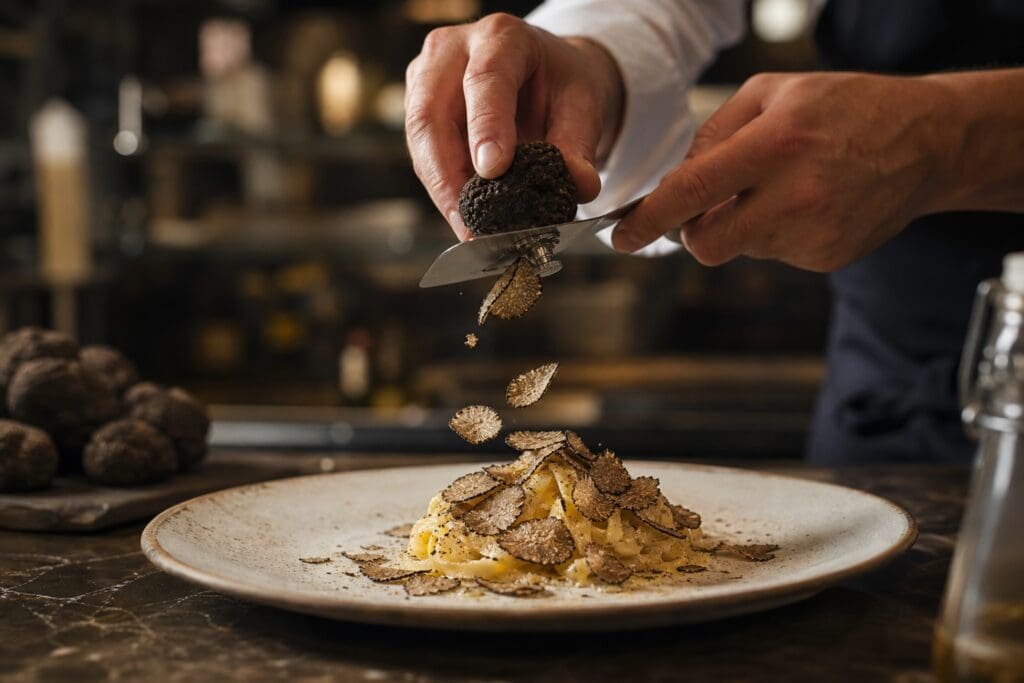
That is why chefs often shave truffle at the table or add it at the last second. The moment of cutting releases scent, and the warmth of the dish helps carry it upwards. This makes truffle feel immediate and generous, even when only a small amount is used.
Truffle also suits ingredients that are comforting and familiar. Eggs, pasta, rice, cheese and potatoes are simple foods, but they become more elegant when lifted by truffle. Fine dining often works through this kind of transformation: taking something recognisable and making it memorable.
Texture plays a part too. Fresh truffle shavings are thin and delicate, giving a subtle bite and visual contrast. They do not dominate like a heavy sauce. Instead, they add an aromatic layer that lingers.
Why chefs love cooking with truffle
Chefs value truffle because it brings complexity without needing complicated technique. Used well, it can make a dish feel complete. Used badly, it can feel excessive or muddled. That makes restraint important.
The finest truffle dishes are often simple. Rather than competing with many strong flavours, truffle tends to work best with ingredients that allow its aroma to shine. A bowl of tagliatelle with butter and truffle can feel more luxurious than a dish crowded with many expensive elements.
Truffle also gives chefs a sense of season and provenance. Menus can reflect what is available now, rather than relying entirely on year-round produce. In fine dining, that connection to time and place matters.
Common truffle pairings include:
- Eggs: Scrambled eggs, omelettes and soft yolks carry truffle aroma beautifully.
- Pasta: Buttered or creamy pasta provides warmth and richness.
- Risotto: Rice absorbs flavour and offers a smooth, comforting base.
- Potatoes: Mash, gratin and chips can all take on truffle’s savoury depth.
- Cheese: Mild, creamy cheeses can support truffle without overpowering it.
The key is harmony. Truffle should feel integrated, not scattered on top as decoration alone.
The theatre of fine dining
Part of truffle’s prestige comes from the experience around it. In many restaurants, fresh truffle is shown to the guest before being shaved over the plate. This gesture adds anticipation. The aroma arrives first, then the visual pleasure of thin curls falling onto warm food.
Fine dining is not only about eating. It is about memory, service, timing and atmosphere. Truffle fits this world perfectly because it engages several senses at once. It smells luxurious, looks distinctive and carries a story of woodland, season and skill.
There is also a sense of generosity in fresh truffle service. Because the ingredient is expensive and perishable, using it signals that the dish has been given special attention. Even a modest portion can feel indulgent when it is freshly shaved.
However, truffle does not need to be flashy. Some of the best uses are quiet. A delicate shaving over risotto can say more than a heavy hand with truffle oil. In refined cooking, elegance often comes from knowing when to stop.
Fresh truffle, truffle oil and truffle products
Consumers often meet truffle through oils, crisps, cheeses, butters and sauces before tasting fresh truffle. These products can be enjoyable, but they are not always the same experience. Fresh truffle has a layered aroma that changes as it warms and meets the food. Processed truffle flavours can be stronger, simpler or more uniform.
Truffle oil is especially familiar, yet it can divide opinion. Some versions are made with added flavourings rather than fresh truffle infusion. This is not automatically bad, but it means the taste may not reflect the complexity of the real ingredient. A little can be pleasant; too much can overwhelm a dish.
Fresh truffle is usually subtler than people expect. Its luxury lies in nuance, not brute strength. If someone’s idea of truffle comes only from very strong truffle-flavoured snacks, the fresh ingredient may seem more restrained at first. With a simple warm dish, its depth becomes clearer.
For fine dining chefs, this distinction matters. Fresh truffle provides aroma, seasonality and texture. Truffle products provide convenience and consistency. Both have uses, but they are not interchangeable.
Is truffle worth the hype?
Whether truffle is “worth it” depends on the dish, the quality of the truffle and personal taste. Some people fall in love with its earthy perfume straight away. Others find it unusual or too intense. That is perfectly normal; truffle has character, and character does not please everyone equally.
In fine dining, truffle is most convincing when it has a clear purpose. It should enhance the dish, not simply raise the price or signal luxury. When paired with the right ingredients and handled gently, it can create a flavour memory that is hard to replace.
Its status comes from more than cost. Truffle combines rarity, freshness, aroma and ritual. It connects the dining room to the landscape and the season. It can turn simple ingredients into something elegant, while still feeling rooted in nature.
That is why truffle remains one of fine dining’s most admired ingredients. It offers pleasure, but also a sense of occasion.
Frequently Asked Questions
What does truffle taste like?
Truffle tastes earthy, savoury and slightly nutty, though its aroma is even more important than its taste. Many people notice notes of garlic, woodland, aged cheese or mushrooms, depending on the type of truffle and the dish.
Why is truffle so expensive?
Truffle is expensive because it is rare, seasonal, difficult to find and highly perishable. It grows underground in specific conditions, must be harvested carefully, and loses its prized fragrance over time after being removed from the soil.
Is truffle oil the same as fresh truffle?
Truffle oil is not the same as fresh truffle. It can add a truffle-style flavour, but it usually lacks the layered aroma, texture and seasonal character of freshly shaved truffle served over warm food.
Which foods go best with truffle?
Truffle goes especially well with eggs, pasta, risotto, potatoes, butter, cream and mild cheese. These ingredients provide warmth and richness, helping to carry the aroma without competing too strongly with the truffle itself.
Can you cook fresh truffle?
Fresh truffle can be used with warm food, but it is often added at the end rather than cooked for a long time. Gentle warmth releases its aroma, while strong heat can reduce its fragrance and subtle flavour.