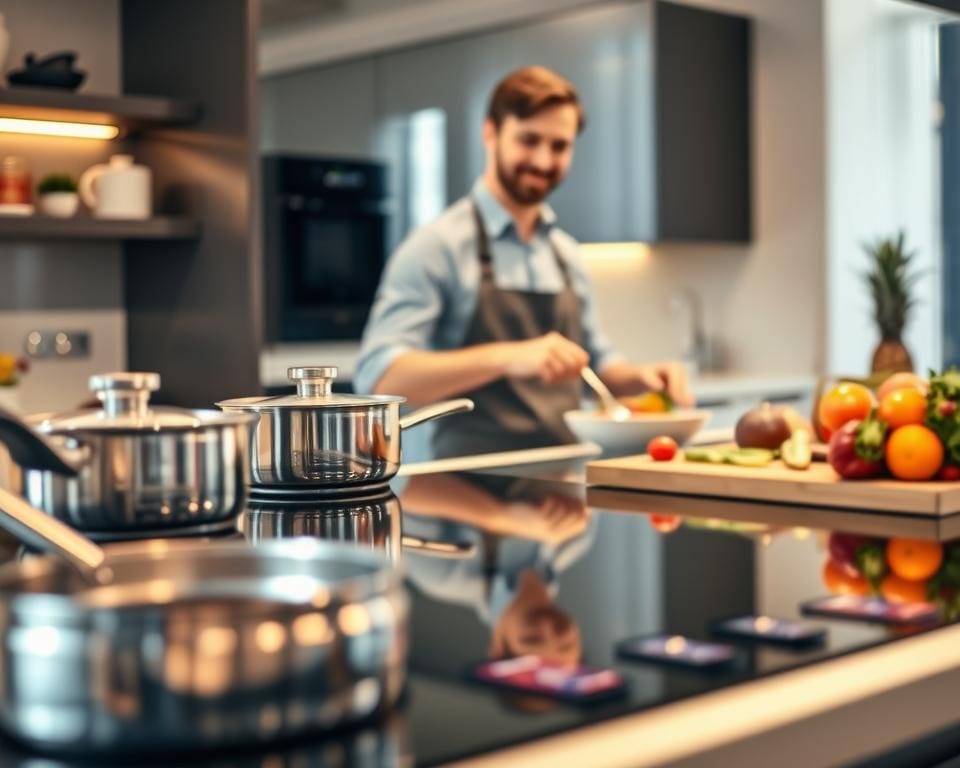
You may have noticed induction cooktops appearing in more UK homes. Advances in technology, rising energy costs and cleaner design have pushed brands such as Bosch, Siemens, AEG, Samsung and Neff to prioritise induction models in their ranges. This shift is a clear sign that modern kitchen appliances are moving away from traditional gas and ceramic hobs.
So why choose induction? Families who value safety and speed, environmentally conscious households aiming to cut energy use, and homeowners renovating for a minimalist look all pick induction. Landlords and developers also favour induction cooking UK for efficiency and to meet updated building standards.
The induction hob benefits are easy to list: greater energy efficiency, lower running costs, precise temperature control, improved safety features, simple cleaning and a sleek appearance. In the sections that follow, you will read how induction works, how it compares with gas and ceramic, and what to consider when buying or installing one in the UK.
Those UK-specific factors are important. Higher energy prices, net-zero commitments and new regulations encourage low-carbon, efficient electrical appliances. You will also find induction-ready cookware widely available from John Lewis, Lakeland and major supermarket chains, which makes the switch easier.
Next, the article will take you through a clear structure: a technical explanation of how induction works, the energy and environmental impact, practical benefits for everyday cooking, and design and installation considerations to help you decide if an induction cooktop is right for your kitchen.
What is an induction cooktop and how does it work?
An induction cooktop heats cookware by generating heat directly in the pan rather than from a flame or a glowing element. You get rapid response and precise control because the hob induces currents in ferrous metal pots. Manufacturers such as Bosch and Miele describe this method in their product literature as an efficient, safe approach to modern cooking.
Basic principles of electromagnetic cooking
Electromagnetic cooking relies on an alternating current that flows through a coil beneath a glass-ceramic surface. The oscillating magnetic field creates eddy currents in compatible pans so the pan itself becomes the heat source. This direct transfer gives high efficiency and fast boil times while the hob surface stays relatively cool except for residual heat from the pan.
Differences between induction, gas and electric hob technology
Gas hobs use an open flame for visible, immediate control. Many chefs prefer that tactile feedback but gas wastes more heat to the surroundings and needs a gas supply and good ventilation. Ceramic or radiant electric hobs heat an element under the glass, then transfer that heat to the pan. Those take longer to respond and lose more energy than induction.
Induction leads the three on speed and energy transfer, typically moving around 80–90% of the energy into the pan. Gas efficiency often sits near 30–40% and ceramic electric around 60–70%. You should weigh the higher upfront cost of induction against lower running costs and faster cooking.
Cookware compatibility and how to check for induction-ready pans
For induction to work your cookware must be ferromagnetic. Cast iron and many stainless-steel pans perform well. Pure aluminium, copper or non-magnetic stainless-steel will not work unless they have a magnetic base.
Use the simple magnet test: if a magnet sticks to the base, the pan is induction compatible. Brands commonly found in the UK with induction cookware options include Le Creuset for cast iron, Tefal for stainless ranges and Circulon with bonded induction bases. Supermarket sets from Lidl or Aldi occasionally include induction-ready pans UK shoppers can buy during special offers.
Base flatness matters for good contact and heat transfer. Many modern hobs have automatic pan detection and will not power on without a compatible pan. If you need a short-term fix, induction interface discs let you use non-compatible pans but reduce responsiveness and efficiency.
Energy efficiency and cost savings of modern hobs
Switching to an induction hob changes how heat reaches your pan. Induction energy efficiency comes from electromagnetic coils that send heat directly into ferrous cookware. That direct transfer keeps surfaces and surrounding air much cooler than gas or ceramic hobs.
You can expect typical system efficiencies of around 80–90% for induction, 60–70% for ceramic electric and roughly 30–40% for gas. These figures explain why induction vs gas efficiency is often the deciding factor for cooks who want faster boil times and less wasted heat.
Faster cooking times mean you may save on energy bills compared with older ceramic or gas units. Tests that time boiling a litre of water show induction often uses less energy overall. Over weeks and months, this repeated saving can add up to real induction cost savings UK households will notice.
How much you save depends on your fuel prices. With recent volatility in UK energy tariffs, you should compare your electricity and gas costs. Online calculators from government sources can help you estimate whether a move to induction will save on energy bills at your address.
Your active cooking time shrinks with induction. That reduces the run time of extractor fans and kitchen lights, cutting indirect energy use. The hob surface cools quickly once you lift the pan, which improves comfort in warm weather and lowers background heating in small homes.
The environmental case strengthens as the grid decarbonises. Induction carbon footprint falls as you use cleaner electricity rather than burning gas in the kitchen. The UK’s net-zero goal for 2050 supports electrifying end uses such as cooking to cut operational emissions.
Lifecycle impacts matter too. Manufacturing and disposal of electronics carry environmental costs that you should weigh against operational gains. Thinking in whole-life terms helps you judge whether a switch delivers genuine long-term benefits.
For practical planning, look into grants and schemes that support low-carbon home improvements. Those incentives can improve the payback on an upgrade and make induction cost savings UK homeowners achieve more attractive.
Practical advantages that appeal to home cooks
Choosing induction brings clear induction benefits in everyday cooking. You get near-instant power changes, so boiling water for pasta or stir-frying with a wok happens faster than on gas or ceramic. That speed helps when you need to sear meat quickly or bring a saucepan down to a gentle simmer without overshooting the temperature.
Premium models from Bosch, Miele and Samsung offer features such as power boost, bridge zones and precise degree settings. These extras give you precise cooking control for sauces, chocolate and other delicate tasks. You can change heat levels in a heartbeat and rely on consistent results.
Faster boil times and precise temperature control
In practice, induction shortens cooking steps and reduces time at high heat. Pasta water comes to the boil more quickly, saving gas or electricity. Searing and wok frying benefit from rapid, direct heat that you can cut immediately when needed.
Precise cooking control means less stirring and fewer ruined sauces. When a recipe calls for a low simmer, you can maintain that exact point without constant adjustments. Those who value consistency will notice the difference straight away.
Safety features for families and busy households
Modern induction hobs include a range of induction safety features that are useful for families and active kitchens. Typical functions include automatic pan detection, residual heat indicators, auto-shutoff after inactivity and child locks.
The lack of an open flame reduces burn and gas-leak risks, making induction for families UK particularly attractive. Overheating protection adds a further layer of reassurance for busy households.
If you or someone in your home has a pacemaker, consult a cardiologist and the device manufacturer before use. Manufacturers and health authorities generally deem induction safe for most people.
Ease of cleaning and maintenance for everyday use
The smooth glass-ceramic surface of an easy-clean hob stays cool except for residual heat, so spills do not bake on as they do with traditional hobs. Wiping up splashes with a soft cloth is usually enough to keep the surface pristine.
For hardened residue, use a hob scraper or recommended cleaner following manufacturer guidance. Avoid abrasive pads that can scratch the finish. High-quality appliances from Miele or Bosch often come with solid warranties and robust surfaces, but take care to prevent chipping from heavy impacts or dragging cast-iron pans across the glass.
An energy-efficient kitchen upgrade that includes an induction hob can appeal to eco-aware buyers and lower running costs. You can read more about how kitchen improvements influence property value at how kitchen renovations increase property value.
Design, installation and long-term considerations for buyers
When you choose induction hob design, think about how the surface will sit in your kitchen. Freestanding cookers, built-in single or multi-zone hobs and modular units with dedicated griddle or wok zones each suit different layouts. Contemporary trends favour flush-mounted, frameless glass-ceramic tops with black or stainless trims that match fitted units and worktops.
Look closely at zone sizes, boost functions, bridge zones for large pans and control types such as touch pads or sliders. Higher-end models often add connectivity and app control, which can help if you want remote timers or recipe-linked heat settings. Try an in-store demo so you can judge control feel and heat response before you commit.
Induction installation requires careful planning of induction electrical requirements. Many domestic hobs draw between 3.7kW and 7.4kW, while integrated ranges can need 30–40 amp supplies or more. Always use a qualified electrician to assess supply capacity and ensure compliance with BS 7671. Older homes may need a consumer unit upgrade or an additional circuit, so get quotes for any electrical work before you buy.
Think about long-term reliability induction offers and how that affects running costs. Typical lifespans are 10–15 years with sensible use, but reliability differs by make and model. Established brands such as Miele, Bosch, Neff and Samsung have UK service networks and spare parts availability. Check warranty terms for parts and labour, consider extended cover, and weigh higher upfront and installation costs against lower operational bills and added resale appeal.
Before purchase, confirm your available electrical capacity, desired hob size and zone layout, cookware compatibility and the warranty and service options. A clear total installed cost will help you decide to choose induction hob that fits your cooking style and home. Read independent tests from Which? and other consumer magazines to compare performance, and factor in energy savings and long-term reliability induction can deliver.