
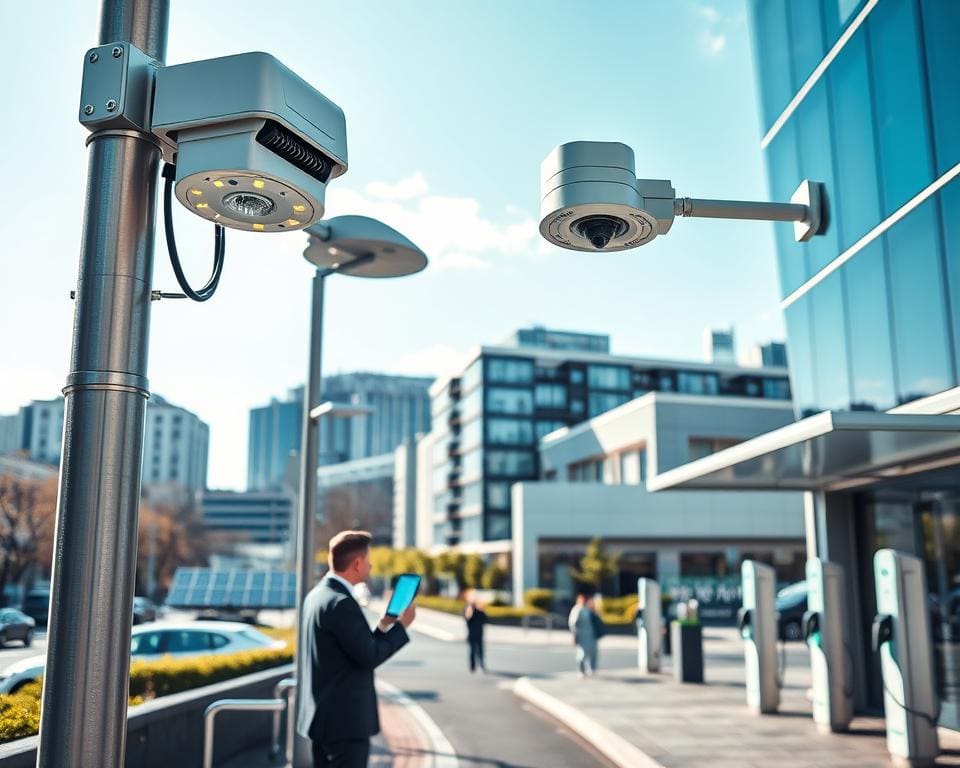
You rely on assets every day: bridges, roads, water mains and power networks. Smart sensors change how you look after these assets by combining sensing elements with on‑board processing, communications and local analytics. That means you get actionable information, not just raw measurements.
Across UK infrastructure and internationally, three forces drive adoption. First, much of the physical stock is ageing and needs more attentive asset management. Second, safety, regulatory and resilience demands are rising, as highlighted by the National Infrastructure Commission’s focus on innovation. Third, budgets are under pressure to lower whole‑life costs while adapting to climate change and extreme weather.
The core value is clear: continuous, automated real‑time monitoring enables condition‑based and predictive maintenance. Utilities and transport operators commonly report maintenance cost reductions of 10–40% and fewer unplanned outages after deploying IoT sensors and digital monitoring. That translates into fewer emergency repairs, longer asset life and better public safety.
Smart sensors plug into wider digital ecosystems: IoT platforms, CMMS and SCADA, and city digital twins that planners use. Open standards and protocols such as MQTT, LoRaWAN and NB‑IoT help you integrate sensor feeds with enterprise dashboards and reporting tools used in infrastructure management.
In the sections that follow you will learn how smart sensors work, the measurements that matter for structural health and operations, the operational advantages of predictive maintenance, real‑world sector examples and the practical considerations for rolling out systems across cities and national networks.
smart sensors: how they work and why they matter for infrastructure
You rely on clear, timely data to manage assets and reduce risk. Smart sensors combine sensing elements, local processing and connectivity to turn raw measurements into actionable information for roads, bridges, tunnels and utilities. This short guide explains the hardware and workflows that make modern monitoring practical for UK infrastructure.
Key components and technologies behind smart sensors
The core sensor components include sensing elements such as strain gauges, accelerometers, magnetometers, ultrasonic transducers, pressure sensors and chemical sensors. A microcontroller or system‑on‑chip performs local tasks. Power comes from batteries or energy harvesting like solar and vibrational harvesters. Memory stores short‑term data while a radio or wired interface handles transmission.
Popular sensing technologies include MEMS sensors for vibration and modal analysis, fibre optic sensors such as Fibre Bragg Grating for long‑span strain and temperature monitoring, electrochemical and optical gas sensors for corrosion and air quality, and ultrasonic or radar sensors for leak detection. Vendors you may meet on projects include Bosch Sensortec, Sensirion, National Instruments and systems integrators such as Siemens, Schneider Electric and ABB.
Data collection, edge processing and connectivity options
Data flows from raw measurement to edge pre‑processing, then to secure transmission and central analytics. Edge computing filters noise, extracts features and applies thresholds. You get reduced bandwidth use, lower latency and longer battery life. Local logic can trigger immediate actions such as shut‑downs or alarms.
Connectivity choices depend on range, power and reliability. Short‑range wireless like BLE or Zigbee suits dense local networks. Long‑range, low‑power networks such as LoRaWAN serve sparse sensor deployments. Cellular IoT options like NB‑IoT and LTE‑M provide broad coverage for mobile assets. Wired protocols such as Modbus, Ethernet and fibre remain best where reliability is critical. Security measures include TLS, device identity and certificate management to protect data and devices.
You can store and analyse data on‑premises or in the cloud. Integration with SCADA, GIS and asset management systems creates workflows that link monitoring to inspections, repairs and reporting.
Types of measurements relevant to infrastructure
Structural health monitoring covers strain, displacement, tilt, vibration, modal frequencies, crack width and corrosion rates. Rising vibration amplitudes or shifts in modal frequencies often signal material fatigue or damage.
Environmental sensors record temperature, humidity, wind, precipitation, air quality (NOx, SO2, particulates) and salinity at coastal sites. These measurements feed deterioration models and inform operational choices like de‑icing or load limits.
Operational measures include flow rates, pressure, energy use, load, occupancy, traffic counts and speed. Sector‑specific tools range from hydrophones for sewer networks to load cells on bridges and distributed fibre optic temperature sensing for pipelines and power cables.
Benefits of real‑time monitoring for asset longevity and safety
Real‑time alerts enable early fault detection and condition‑based alarms that cut the risk of catastrophic failure. You replace blanket inspection schedules with targeted checks, which reduces downtime and lowers life‑cycle costs.
Timely data extends useful life through prompt interventions, improves emergency response times and supports capital planning. Decision makers gain evidence for regulatory reporting and can prioritise interventions using risk and remaining useful life models.
Operational advantages of intelligent monitoring and predictive maintenance
You will see tangible gains when sensor networks move you from fixed schedules to condition‑based monitoring. Continuous vibration, flow and temperature streams let you replace bearings when vibration signatures shift and replan dewatering pump work when flow and vibration patterns point to wear.
That approach cuts emergency repairs that close roads or interrupt water supply. Asset managers report downtime reductions commonly between 20% and 50% when shifting from reactive care to predictive maintenance. Fewer surprise failures mean safer services and steadier availability for customers.
Data-driven prioritisation helps you target the highest‑risk assets first. Remote diagnostics reduce routine inspections and lower travel costs for field crews. Small specialist teams can intervene only where the data signals real need, supporting strict maintenance optimisation and lower operating costs.
You will also reduce spare parts inventories and improve contractor scheduling. Early intervention arrests degradation, which extends service intervals and trims total cost of ownership for fleets and networks.
Look to transport monitoring examples where accelerometers and strain gauges reveal fatigue in bridges and tunnels. Smart road sensors and weigh‑in‑motion units help councils and Highways England plan resurfacing and limit closures by managing heavy vehicle impacts.
Utilities sensor deployments are changing how water and power networks run. Acoustic and pressure sensors spot leaks early, cutting water loss and customer interruptions. Distributed temperature sensing on overhead lines flags overheating before faults spread, improving resilience under UK regulator programmes focused on leakage and reliability.
In buildings, CO2 and occupancy sensors tune HVAC to demand and reduce energy use. Façade and structural monitoring during high‑rise refurbishments keeps sites safe. Hospitals and busy stations use predictive maintenance to avoid equipment failure that would disrupt critical services.
Analytics and ML for infrastructure transform raw streams into actionable insight. You must start with cleaning and normalising data, then extract features such as vibration spectral markers. Baseline models, anomaly detection and prognostics estimate remaining useful life for components.
Supervised models predict specific failure modes when labelled data exists. Unsupervised methods highlight novel anomalies. Time‑series approaches like ARIMA and LSTM, plus ensemble techniques, improve forecasting for load and wear. Where failure records are sparse, a digital twin or physics‑informed model can enrich training data.
Explainability and rigorous validation are essential so engineers trust outputs. Continuous retraining on fresh sensor feeds sharpens accuracy. That closed loop turns sensor investments into enduring operational advantage across infrastructure case studies in transport, utilities and buildings.
Deployment considerations, challenges and best practice for city and national infrastructure
When you plan sensor deployment, start with clear objectives and measurable KPIs: safety improvement, life‑extension or cost reduction. Run an asset criticality analysis and a pilot to validate the business case before wide infrastructure rollout. Define success metrics for pilots so you can scale with confidence and avoid costly rework.
Engage stakeholders early — asset owners, operators, IT teams, procurement and regulators — to align responsibilities and settle IoT governance. Choose open standards and interoperable data models to prevent vendor lock‑in and to support long‑term forensic analysis, regulatory compliance and smooth integration with existing enterprise asset management and GIS systems.
Address practical constraints such as power availability, ruggedisation, tamper resistance and representative sensor placement. Balance battery life, sampling frequency and communication costs in urban and rural environments, and ensure time synchronisation for multi‑sensor modal analysis. For connectivity, favour proven options like LoRaWAN, NB‑IoT, MQTT and REST APIs where they meet your coverage and scalability needs.
Mitigate cybersecurity risks with device authentication, network segmentation and scheduled firmware updates in line with NCSC guidance. Clarify data ownership, retention policies and UK GDPR obligations when data could identify individuals, and secure public acceptance through transparency about data use. Build capacity by training asset managers, technicians and by forming cross‑disciplinary teams that combine civil engineering, data science and security expertise.
Plan for resilience: include redundancy for critical monitoring points, contingency plans for communications outages and regular calibration schedules. In procurement, account for lifecycle costs, maintenance, security obligations and data access rights, and favour framework agreements and experienced systems integrators for national‑scale deployments. Thoughtful deployment that emphasises interoperability, data security and robust governance will help you realise the full benefits of smart monitoring and long‑term infrastructure resilience.