You will find that Bristol City Council’s policies make clear why greener public spaces Bristol are a priority. The Bristol One City Plan and the council’s climate emergency declaration set targets for cutting emissions, improving air quality and increasing urban biodiversity. These commitments direct Bristol council green investment towards parks, street trees and sustainable drainage.
National and regional rules reinforce local priorities. The National Planning Policy Framework, the Environment Act 2021 and guidance from the West of England Combined Authority promote nature-based solutions and SuDS. Together, these frameworks create incentives and obligations that shape urban green infrastructure Bristol.
Councils also respond to practical pressures you notice day to day: population growth, demand for accessible recreation and the need for resilient streetscapes. Greener public spaces reduce flood risk, ease urban heat, and provide multi-functional land that supports both community use and wildlife. This integrated approach explains much of the Bristol council green investment you see in neighbourhood parks and open spaces.
In the rest of the article you will learn about social, health and economic benefits, how projects are planned and funded, and read examples of schemes across Bristol parks and open spaces that you may visit or help influence.
Benefits of greener public spaces for communities and wellbeing
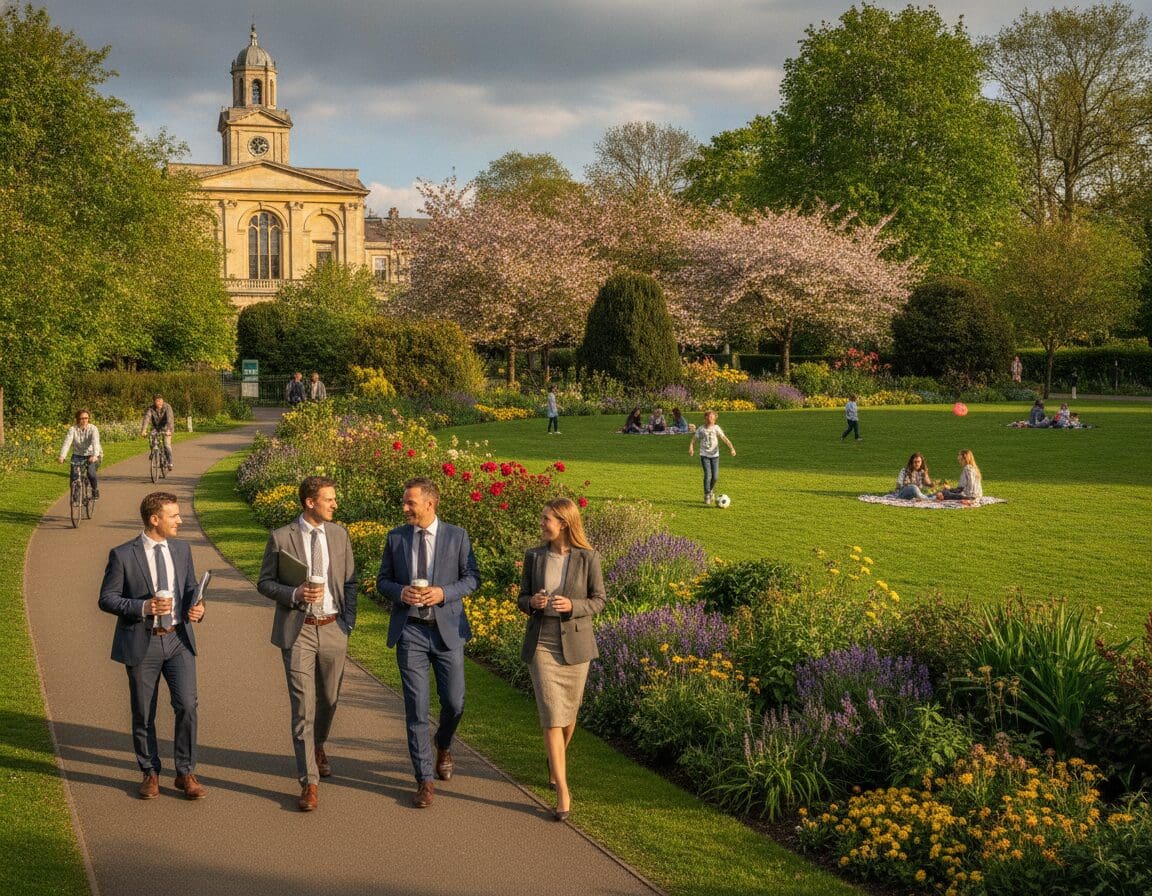
Greener streets, parks and community gardens bring clear gains you can see and feel. Public Health England and peer-reviewed studies link nearby nature to lower stress, reduced anxiety and depression, and smaller risks from heart disease. Those health benefits urban green spaces deliver show up as fewer GP visits, more walking and cycling, and faster recovery after illness.
Improving mental and physical health
Access to parks and tree-lined routes makes day-to-day exercise easier and more attractive. You are more likely to walk to school, cycle to work or use a green route for errands when safe paths and seating are in place. Studies find measurable gains in fitness, lower blood pressure and better sleep from regular time outdoors.
Green areas also support mental wellbeing. Time among trees and community gardens reduces cortisol and improves mood. Those health benefits urban green spaces provide are strongest when spaces are nearby, well maintained and easy to reach for all ages.
Strengthening social cohesion and community pride
Parks and allotments act as neutral meeting places. Friends of Parks groups, community-led allotments and local events boost volunteering and civic pride in Bristol. These kinds of projects raise community cohesion Bristol parks need by offering shared activities and informal supervision that make neighbourhoods feel safer.
Inclusive design such as level paths, seating and lighting helps older people and families take part. When you join conservation or gardening groups you build ties with neighbours and create a stronger local network.
Economic advantages for local businesses and tourism
Attractive public spaces draw visitors and increase footfall for nearby shops and cafes. Local analyses show streetscape improvements can lift retail performance and raise property values. The economic impact public realm Bristol projects produce includes higher visitor numbers, longer stays and stronger local trade.
Jobs follow from planting and ongoing maintenance, plus training in green skills and roles in urban nature projects. Those urban biodiversity benefits support tourism and create new local opportunities in landscaping and ecological management.
- Improved air quality from trees and plants cuts pollutant exposure.
- Cooling from green cover reduces heat stress in summer.
- Better stormwater management protects streets and homes from flooding.
Practical steps you can take include using parks for exercise, joining a local conservation group and backing council schemes that expand green space. Small actions help you capture the benefits greener public spaces Bristol promise for your family and neighbourhood.
How public spaces Bristol projects are planned and funded
You need a clear sense of how decisions are made before you get involved. Bristol City Council sets strategic direction through the One City Plan and Local Plan policies. Officers turn these strategies into site briefs, street design standards and park management plans so that Bristol climate action public realm targets become practical actions on the ground.
Statutory planning plays a key role. Planning obligations such as Section 106 agreements and the Community Infrastructure Levy help secure public realm improvements linked to new developments. These mechanisms guide how developer contributions are applied to local projects and shape public spaces Bristol planning at neighbourhood level.
Funding greener public spaces Bristol relies on a mixed funding landscape. You will often see central government grants like the Levelling Up Fund and Community Renewal Fund matched with National Lottery Heritage Fund awards for parks. Environment Agency and DEFRA grants support flood resilience and biodiversity measures.
Partnerships extend the funding base. The National Trust, Avon Wildlife Trust and universities contribute expertise, monitoring and matched funds. Private contributions arrive through developer funding or business improvement districts. Council budgets remain constrained, so blending capital investment with revenue for maintenance is vital to long-term success.
Community consultation Bristol parks matters at every stage. Effective engagement uses public workshops, design charrettes, online platforms and youth outreach so projects reflect local needs. Co-design with marginalised groups improves accessibility and safety and ensures cultural relevance.
Participatory budgeting and community asset transfers let local groups steward green spaces. Volunteer-led management at places such as St Werburghs City Farm shows how local stewardship reduces maintenance costs and builds ownership. You can see how strong community involvement shapes outcomes.
Real examples make the process tangible. Castle Park regeneration, Harbour improvements around Bristol Floating Harbour and urban tree-planting schemes show varied funding mixes and community input. Each project set clear objectives, combined council strategy with partner grants, and tracked outcomes like biodiversity gains and increased use.
Common success factors include clear leadership, mixed funding, maintenance plans and robust monitoring. Pitfalls often stem from underfunded upkeep or late engagement. Understanding these points helps you navigate public spaces Bristol planning and spot where your voice can make a difference.
Conclusion
You can see from this public spaces Bristol summary that local council strategies, national policy and everyday community needs all push the city towards more green infrastructure. Investment brings clear wellbeing gains, boosts local economies and strengthens social ties. These benefits arise because projects combine planning, diverse funding and meaningful community input to deliver lasting change.
The future of greener public spaces Bristol will be shaped by nature-based solutions for flood resilience, stronger access and equity measures, and green corridors that link neighbourhoods. Digital tools will help councils and communities monitor tree health, manage planting and gather views. Together, these trends support sustainable urban living Bristol by making streets and parks greener, safer and more welcoming.
You can play an active part. Join a Friends group, take part in consultations, help with tree-planting or litter picks, or write to your councillors to press for maintenance funding. Use local green spaces regularly to support your own health and to show their value to the wider city.
In short, investing in greener public spaces in Bristol enhances community wellbeing and encourages sustainable urban living Bristol for residents and visitors alike. Your involvement helps turn plans into places that deliver long-term benefits for the whole city.