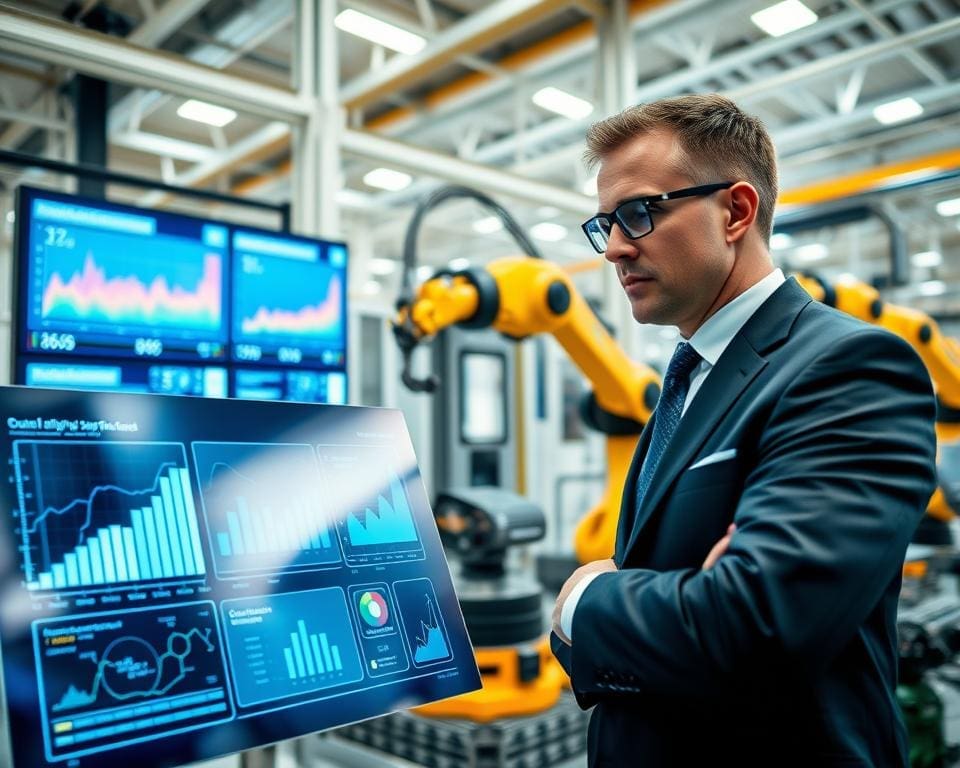
You rely on robust quality control technology to keep products consistent and compliant on your production line. Quality control technology covers the hardware, software and integrated systems used to monitor, inspect and govern product quality across the whole manufacturing lifecycle.
Today this matters more than ever. Customers expect flawless products, regulators such as the MHRA and BSI enforce stricter standards like BS EN ISO 9001, and global supply-chain pressures demand tighter control. These forces make production quality improvement a strategic priority.
When you adopt manufacturing quality systems and quality assurance technology UK solutions, you can expect measurable gains. Typical outcomes include reduced defect rates, lower scrap and rework costs, faster time-to-market, improved traceability, stronger compliance and higher customer satisfaction.
This article will guide you through what to look for. You will get an overview of relevant technologies, a deep dive into automation, AI and data analytics, practical advice on integrating systems with your workflows, and an analysis of operational and business impacts. Throughout, you will find practical insights to help you assess and implement QA technology benefits on your shop floor.
Overview of quality control technology in modern production
You are entering a concise guide to how modern tools transform inspection, measurement and process control on the shop floor. This overview explains what those tools are, why UK manufacturers gain value from them and how they change quality assurance from reacting to predicting problems.
Defining quality control technology and its role
QC technology definition covers a broad set of components. You will find machine vision cameras, coordinate measuring machines (CMMs), automated test equipment (ATE) and inline sensors among the hardware. IoT endpoints, edge computing devices and MES platforms link devices to analytics suites and AI/ML platforms.
Each element has a clear role. Inspection detects visible defects at speed. Measurement quantifies tolerances with tools such as CMMs. Process control keeps parameters within limits. Traceability records provenance for audit trails. Predictive maintenance reduces equipment-induced defects before they happen.
These systems help you meet common UK and EU standards, such as ISO 9001 and sector-specific rules like IATF 16949 for automotive and AS/EN 9100 for aerospace. Digital records make demonstrating compliance for BSI audits more straightforward.
Key benefits for manufacturers in the United Kingdom
Adopting these technologies delivers measurable benefits quality control UK teams value. High-speed, consistent inspection reduces defect rates and scrap. You lower costs by cutting labour-intensive manual checks and reducing returns and warranty claims.
Digital traceability speeds up compliance and audit readiness. That helps you satisfy buyers and regulators at home and overseas. Improved repeatability boosts competitiveness for UK exporters by raising manufacturing quality role in global supply chains.
Sustainability improves through waste reduction and better resource use, which supports UK green targets and strengthens ESG reporting for stakeholders.
How technology shifts quality assurance from reactive to proactive
Traditional quality assurance relies on manual sampling and post-production checks. You often take corrective action after a failure is found, which can be costly and disruptive.
Proactive quality assurance uses real-time monitoring and in-line inspection to stop issues early. Inline machine vision can reject out-of-spec parts immediately. Predictive models flag tool wear trends so you replace tooling before scrap rises.
The business outcomes include fewer stoppages, improved first-pass yield and more predictable delivery schedules. These benefits reinforce the manufacturing quality role within your operations and across customer relationships.
Automation, AI and data analytics for defect reduction
The move to automated inspection systems changes how you catch faults on the line. High-resolution cameras, structured lighting and advanced image processing let you check dimensions, surface finish, assembly fit and labels at production speed. Vendors such as Cognex and Teledyne DALSA supply vision hardware, while Keyence provides precision sensors and measurement tools. Optical character recognition handles code and label verification so you can ensure traceability on every unit.
You will see these systems across sectors. In electronics they inspect PCB solder joints. In automotive they verify component dimensions. In pharmaceuticals they confirm packaging integrity. Throughput rises, consistency exceeds human capability and you can move from sampling to 100% inspection for critical features with minimal cycle-time impact.
Artificial intelligence brings new detection layers to visual inspection and sensor data. Supervised models classify known defect types while unsupervised and semi-supervised approaches flag novel anomalies. Deep neural networks detect subtle visual patterns, such as micro-cracks, that traditional rules miss.
AI quality control extends beyond images. Models trained on vibration, acoustic and process signals can spot drift before defects appear. Predictive quality analytics combine process parameters like temperature, pressure and cycle time with past outcomes to forecast defect probability for upcoming cycles. That allows you to intervene proactively and reduce scrap.
Practical deployment needs labelled data, strong data governance and rigorous model validation. Collaboration between data scientists and process engineers speeds up model tuning and ensures outputs map to actionable control changes on the shop floor.
Data analytics ties inspection results to machine logs and production settings so you can find root causes and trends fast. Aggregating data enables statistical process control, Pareto analysis and trend monitoring. Tools such as Tableau and Power BI help visualise patterns. Python or R enable deeper statistical work and custom modelling.
Use analytics to support root cause analysis manufacturing by correlating shift patterns, supplier lot numbers, machine serials and environmental readings. This approach can expose a single supplier batch that contributes most failures or reveal a machine that drifts when humidity rises. Armed with that insight you can target supplier quarantine, maintenance or process adjustments to cut defect rates.
Integrating quality control technology with production workflows
To link inspection to action you need a clear architecture. Sensors and inspection stations must feed edge devices or local servers so machines and operators receive instant instructions. This approach supports quality control integration across the line and prevents faults from travelling downstream.
Real-time monitoring and feedback loops on the shop floor
Edge controllers collect measurement data from cameras and probes. When an inspection station spots a dimensional drift, the system can trigger a CNC parameter adjustment or flag a batch for review. Your operator workstation can display visual alerts and corrective checklists so staff act quickly.
Closed-loop control contains defects immediately. You reduce error propagation and improve operator decisions by presenting contextualised data at the point of work. Real-time monitoring shop floor setups give you faster containment and clearer action paths.
IoT sensors and connectivity for traceability
Common IoT endpoints include torque sensors, pressure transducers, temperature probes, RFID and barcode readers, plus environmental monitors. These devices capture process parameters and link them to unique identifiers such as serial numbers or batch codes.
Traceability workflows join inspection records, operator logs and material IDs to create an audit trail from raw material to finished good. Protocols such as OPC UA and MQTT help move telemetry reliably, while GS1 standards assist product identification for export markets.
IoT traceability manufacturing improves recall management and provenance checks. Your suppliers and customers gain faster verification and clearer accountability when trace data is organised and accessible.
System integration with MES, ERP and PLM platforms
Quality functions must connect to MES for shop-floor control, ERP for material and financial reconciliation, and PLM for design-change traceability. MES ERP integration lets you automate rejection of non-conforming batches and update inventory and cost records without manual work.
Linking failed inspection data into PLM quality workflows creates a direct path from field defects to engineering change requests. Consolidated KPIs in MES dashboards give operations a single view of performance and quality trends.
Integration tools include enterprise service buses, APIs and connectors from Siemens, Rockwell Automation, PTC and SAP. Expect challenges with data standardisation, retrofitting legacy equipment and cybersecurity. Cross-functional governance involving IT, quality and operations makes implementations more resilient and effective.
Operational and business impacts of adopting quality control technology
When you adopt quality control technology, you typically see measurable operational benefits QC within months. First-pass yield often rises, moving from single-digit to double-digit percentage-point improvements depending on your starting point. That reduces rework and scrap, boosts throughput and improves on-time delivery, which in turn strengthens customer satisfaction and contractual performance for manufacturers competing in the manufacturing competitiveness UK landscape.
Labour costs fall as automated inspection and fewer quality-driven stoppages free up operators for higher-value tasks. Enhanced uptime from predictive maintenance and fewer line stops increases capacity utilisation. These gains form the core of the business impact quality control, cutting warranty claims and lowering recall risk while improving market reputation.
To quantify ROI quality technology, account for capital costs — vision systems, sensors, software licences — plus integration and training. Compare those to annual savings from defect reduction, labour efficiencies and avoided returns. Many firms report payback in 12–36 months: a single high-speed line may pay back faster, while a whole-factory roll-out follows a longer path but yields larger strategic benefits.
Strategically, quality technology adoption bolsters compliance for audits and customer standards and strengthens supplier management through traceability and data-driven supplier quality programmes. To secure sustainable gains, upskill staff, involve operators early, set clear KPIs and run phased pilots on critical lines. Start with a maturity assessment, pick high-impact defect modes for pilot automation, obtain executive sponsorship and measure baseline KPIs — this pragmatic route helps embed quality control technology across your operations and improves your long-term competitiveness in the UK market.