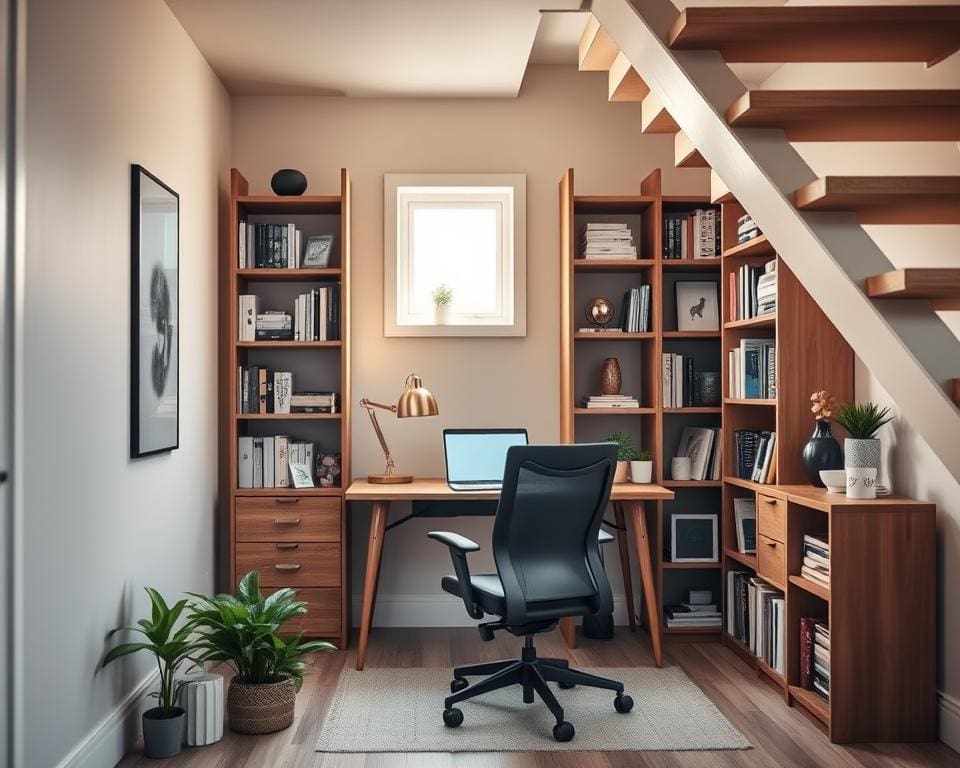
An under stairs home office can turn an overlooked corner into a useful place to work, study or manage household tasks. Depending on its size and position, it could support remote work, freelance projects, homework, paperwork or occasional computer use.
This home office under stairs uses floor space that may otherwise remain empty. It can also reduce the need for a separate room and keep work away from the dining table or living-room furniture. As small home office ideas go, it offers a practical way to add a dedicated work zone without changing the layout of your home.
Good planning involves more than fitting in a desk. You should check the headroom, usable width, natural light, ventilation, electrical access and storage. The position of the staircase also affects comfort, privacy and how easily you can move around the compact workspace.
This guide explores how to create a safe, comfortable and attractive staircase office. You will first see why it suits compact homes, then learn about measurements, furniture, lighting, storage and decoration. With the right approach, unused space solutions can feel like a natural part of your home rather than a cramped temporary workstation.
Why an under stairs home office is ideal for compact homes
The space beneath a staircase is often overlooked. In a small home office, it can become a useful work zone without taking floor area from a bedroom, lounge or kitchen. A fitted desk can follow the shape of the stairs and make good use of an awkward footprint.
This compact home workspace suits terraces, flats, maisonettes and open-plan homes. The height and width will vary, so measure the area before choosing furniture. A corner desk or slim built-in surface can create a practical space-saving office with a clear purpose.
A defined desk, task light and storage system help separate work from leisure. This matters when your multifunctional room serves several needs. You can keep paperwork and equipment in one place, rather than allowing work to spread across the dining table or sofa.
An under-stairs home office is often best for a laptop-based workstation. Larger monitors, printers and paper files need careful planning, stronger shelving and enough legroom. Your routine should guide the design: occasional administration needs less equipment than daily remote working at home.
You can conceal a home office nook with cupboard doors, sliding panels or a curtain. Check that each option leaves the staircase clear and does not restrict an escape route. Panels should open safely and never create a trip hazard.
Check the wall, skirting boards, flooring and staircase before fitting fixed furniture. Plan electrical sockets, internet access and cable routes at the same time. Trailing leads across walkways can create avoidable risks in a tight space. For further ideas, explore this guide to stylish home offices in small spaces.
Planning a comfortable and functional workspace
Good under stairs office planning starts with a clear survey. The space may look roomy, yet sloping ceilings and fixed fittings can limit how you use it. Careful planning helps you create a safe, calm and practical place to work.
Measuring the space beneath your stairs
Take accurate staircase measurements before buying furniture. Record the maximum width, the height at several points and the depth from the front stair edge to the back wall. Note where the ceiling slopes, as the lowest area may not suit a monitor or shelving.
Mark the zone where you can sit upright without touching the stairs with your head or shoulders. Check skirting boards, radiators, sockets, switches, pipes, access panels and doors. Each feature can reduce the usable area.
Plan how you will enter and leave the desk. Your chair must not block a passage or affect people using the stairs. Drawers and cupboard doors should open without creating an obstruction.
Built-in joinery, structural changes and new electrics may need professional support. Speak to a qualified tradesperson before work begins. Check building regulations, landlord permission and local requirements for your property.
Choosing a suitable desk and office chair
Choose a compact office desk that fits the usable width, not the widest part of the alcove. Leave enough room for your knees and feet. A shallow desk can protect circulation space, while a height-adjustable model gives you the option to work standing.
Pair the desk with an ergonomic office chair. Look for lumbar support, adjustable armrests and breathable, comfortable materials. Set the chair so your forearms rest parallel to the floor, with your wrists in a natural position.
Keep the screen at eye level to reduce neck strain. A monitor stand can help when the desk is low. An anti-fatigue mat may support comfort if you work at a standing desk. For more ideas, explore this guide to a comfortable desk setup.
Improving lighting and ventilation
Good home office lighting makes the space easier on your eyes. Place the desk near natural light when possible, but avoid glare on the screen. Add an adjustable lamp for darker afternoons and position it to cast light across your work, not into your eyes.
Workspace ventilation matters in a small enclosed area. Keep vents clear and allow air to move around the desk. A quiet fan or improved room ventilation can help manage heat from computers and monitors. Take regular movement breaks to stay alert during long periods of work.
Smart storage ideas for an under stairs office
Good under stairs office storage keeps stationery, files, chargers, books and equipment from crowding a small floor area. Plan each item’s place before you buy furniture. This makes the office easier to use and keeps the desk clear.
Use the changing height beneath the staircase to your advantage. Taller sections can hold shelving, cupboards or a filing unit. Lower areas suit shallow drawers, pull-out boxes and closed storage.
Built-in office storage offers a tailored fit. Fitted cupboards can follow the stair profile and hide work equipment when the office is not in use. Storage methods for small homes can help you make better use of every available section.
Wall-mounted shelves keep frequently used items close at hand. Fix them securely and check that they do not reduce head clearance or interfere with the stairs. Anchor tall units to the wall, too, and keep sockets, vents and access panels clear.
- Use drawer organisers for pens, cables and small tools.
- Place document trays beside the desk for current paperwork.
- Store files in vertical holders to save surface space.
- Label boxes so less-used items are easy to find.
Store heavier equipment on sturdy lower shelves. Keep rarely used items in higher compartments or closed staircase cupboards. Open shelving can make the office feel lighter, while doors and drawers create a calmer look in a hallway or living room.
Cable planning is an important part of small office organisation. Use cable clips, trunking and a cable tray to guide wires neatly. A dedicated charging station can stop chargers from tangling or crossing the floor.
Give a printer enough room for paper handling, ventilation and maintenance. A low, cramped compartment can make refilling paper difficult and may cause the machine to overheat. Place it on a firm shelf with clear access.
Dual-purpose furniture can add useful capacity without taking more floor space. Choose a desk with drawers, a hinged worktop or a cupboard with a fold-down workstation. These practical desk storage ideas help you close away equipment after work.
Keep only regularly used items within reach. A clear desktop makes the area feel larger and supports a clutter-free workspace. Mix open shelves with closed storage to balance quick access and visual calm.
Decorating your under stairs workspace for productivity
Good under stairs office décor should make the space inviting without reducing its practical value. Choose pale neutrals, soft whites or muted shades to reflect light and make the area feel larger. For useful home office colour ideas, continue tones from the adjoining room, or use a darker wall, painted interior or patterned wallpaper to mark out a clear working zone.
Durable, wipe-clean finishes work well in a hallway or near a busy entrance. Add texture with a desk mat, fabric noticeboard, framed prints or a small rug, but keep the chair, stairs and air vents clear. This approach supports small workspace design while creating a more personal setting. You can find further inspiration in these small apartment decorating ideas.
Keep the desk surface calm by displaying only useful or motivating items. Store paperwork, cables and spare equipment in closed cupboards or boxes. A plant can soften the space if there is enough natural or suitable artificial light, but it must not block a lamp, vent or access route. These simple choices create calming office décor without adding visual clutter or glare around your screen.
If the stairs sit beside a lounge or hallway, fabric furnishings and a noticeboard may reduce echoes. Your productive home office should also support healthy habits: adjust your posture, take regular breaks, look away from the screen and keep the area ventilated. Combine these habits with ergonomic workspace design, suitable lighting, efficient storage and purposeful decoration to create a comfortable office that works every day.