How did the espresso martini become a London favourite? The short answer is that it was born in the right city, at the right moment, with exactly the right mix of glamour, energy and flavour. London gave the drink its stage: busy bars, late nights, sharp-dressed crowds, and a growing love of proper coffee.
How did the espresso martini become a London favourite? A short answer
The espresso martini feels as if it could only have come from London. It is stylish without being stiff, lively without being loud, and indulgent without being too sweet. It suits a city where people move from work to dinner to drinks, often without a pause.
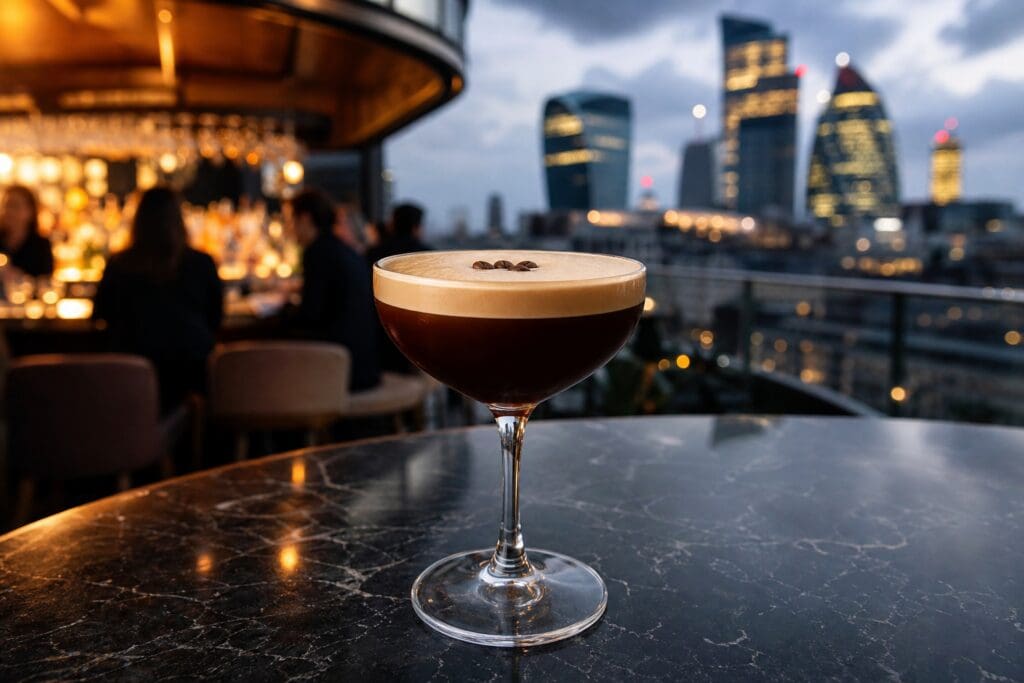
At its heart, the drink is simple: vodka, coffee liqueur, fresh espresso and sugar syrup, shaken hard with ice. Served in a chilled cocktail glass, it arrives dark, glossy and crowned with foam. That look matters. Before a sip is taken, it already feels like an occasion.
Londoners also helped shape its reputation. The capital has long been a place where new drinks are tested, renamed, refined and revived. A cocktail can begin in one bar, spread through Soho, Mayfair and Shoreditch, then become a familiar order from hotel lounges to neighbourhood restaurants.
The espresso martini did exactly that. It was not just a fashionable drink; it became a London habit.
The London origins of the espresso martini
The espresso martini is widely credited to Dick Bradsell, one of the most influential British bartenders of the late twentieth century. He is associated with several modern classics, but the espresso martini is perhaps the one most firmly tied to London nightlife.
The drink is generally understood to have emerged in the 1980s, during a period when London’s bar scene was becoming more confident and cosmopolitan. Restaurants, members’ clubs and cocktail bars were changing the way people drank. There was a new interest in drinks made with care, not just long mixed drinks or simple spirit-and-mixer serves.
The original idea was practical as well as stylish. A guest wanted something that would provide both a lift and a sense of sophistication. Coffee brought the energy; vodka brought the clean, smooth backbone; liqueur and syrup rounded the edges. The result was a cocktail that felt modern from the first pour.
It was not always called an espresso martini. Like many cocktails, it moved through names and versions before settling into the form people know today. The word “martini” here does not mean it contains gin and vermouth. Instead, it reflects the glass, the serve and the mood: neat, elegant, chilled and grown-up.
Why London was ready for it
London in the 1980s and 1990s had the right conditions for a drink like this to catch on. The city’s social life was busy, layered and ambitious. People wanted drinks that matched the pace of the night.
The espresso martini also suited London because it sat between several worlds:
- The cocktail bar: polished glassware, sharp technique and a little theatre.
- The restaurant table: ideal after dinner, especially when dessert felt too much.
- The late-night scene: a drink with coffee at its core naturally fitted longer evenings.
- The fashion and media crowd: visually striking, easy to remember and simple to order.
It helped that the drink was not difficult to understand. Even people who did not know much about cocktails could recognise the appeal of coffee and vodka. It sounded bold, but not intimidating.
Coffee culture gave the cocktail fresh momentum
The espresso martini might have started in a bar, but its lasting popularity owes a great deal to Britain’s changing coffee culture. As espresso-based drinks became part of daily life, people became more aware of flavour, crema, roast and strength.
London was central to that shift. Independent cafés, restaurant coffee programmes and speciality roasters all raised expectations. Coffee was no longer just something to wake up with; it became something to discuss, compare and enjoy.
That change made the espresso martini feel more relevant. It was not simply a sweet, dark cocktail. When made well, it became a showcase for fresh espresso. The quality of the coffee started to matter.
A good espresso martini needs balance. If the coffee is flat, the drink tastes dull. If the liqueur dominates, it becomes sticky. If the vodka is too harsh, the finish suffers. London’s growing coffee knowledge encouraged bartenders to pay closer attention to all of this.
The role of fresh espresso
Fresh espresso is central to the drink’s character. It brings aroma, bitterness, warmth and body, even though the final cocktail is served cold. When shaken with ice, the coffee helps create the creamy foam that sits on top of the drink.
That foam is more than decoration. It softens the first sip and carries the scent of coffee towards the nose. It also gives the drink its recognisable look, often finished with three coffee beans.
In London bars, the ritual matters. The sound of the shaker, the chilled glass, the dark pour and the neat garnish all help turn a familiar order into a small performance.
Why the flavour works so well
The espresso martini’s popularity is not only about fashion. The flavour makes sense. It brings together bitterness, sweetness, strength and texture in a way that feels complete.
Vodka provides a relatively neutral base, allowing the coffee to lead. Coffee liqueur adds sweetness and depth. Sugar syrup smooths the bitterness of espresso. Ice chills and dilutes the drink just enough to make it silky rather than sharp.
The result is a cocktail with contrast. It is sweet, but not necessarily sugary. It is strong, but not rough. It feels luxurious, but it is still easy to drink.
This balance helps explain why it appeals to different drinkers. Some people order it instead of dessert. Others choose it as a first cocktail of the evening. It can feel celebratory after a meal, energising before a night out, or comforting at the end of a long day.
Its flavour also works with the way many Londoners eat and drink. The city’s restaurant scene covers everything from steak and chips to small plates, sushi, pasta and tasting menus. Coffee, chocolate and roasted flavours fit comfortably after many styles of food.
The look that made it instantly recognisable
Few modern cocktails are as easy to spot across a room. The espresso martini has a strong visual identity: dark surface, pale foam, elegant glass and coffee bean garnish. In a crowded London bar, that matters.
Drinks become favourites partly because people notice them. Someone sees one being carried past and asks what it is. A friend orders one, another follows, and a table of four suddenly has matching glasses. The espresso martini benefits from that social effect.
It also photographs well, though its popularity began long before social media became central to drinking culture. Even so, the drink’s clean shape and rich colour have helped it remain visible in a world where presentation matters.
London has always enjoyed a little style with its substance. The espresso martini gives both. It looks refined but not fussy. It feels special but not remote. That is a powerful combination.
From late-night order to modern classic
The espresso martini moved from fashionable London bars into the wider British drinking imagination because it proved adaptable. It could live in a hotel bar, a neighbourhood bistro, a members’ club or a chain restaurant. It could be made carefully by a skilled bartender, or simplified for a busy service.
Over time, it became more than a trend. A trend depends on novelty. A classic survives because people keep wanting it after the novelty fades.
Its modern-classic status is helped by several qualities:
- Memorable name: easy to say, easy to remember and clear enough for casual drinkers.
- Reliable appeal: coffee and sweetness are familiar, while vodka keeps the drink crisp.
- Flexible occasion: suitable before dinner, after dinner or during a lively evening.
- Strong identity: the appearance, flavour and texture are instantly recognisable.
London’s bartenders have also kept the drink alive by making small adjustments without losing its core. Some use different coffee liqueurs. Some adjust sweetness. Others experiment with flavoured syrups, darker spirits or alternative garnishes. Yet the classic version remains the reference point.
Why London still loves the espresso martini
The espresso martini continues to suit London because the city still values speed, style and variety. It is a cocktail for people who want flavour and polish without a long explanation.
It also bridges generations. Older drinkers may remember its revival through classic cocktail bars. Younger drinkers often meet it through restaurants, celebrations and nights out. It has avoided being trapped in one era because it feels both retro and current.
There is also a practical reason for its endurance: it is satisfying. Not every cocktail leaves a strong impression, but an espresso martini does. The aroma of coffee, the chilled glass, the creamy top and the smooth finish all create a complete experience.
London has many signature drinking moments: a pint outside a pub, a glass of sparkling wine in a theatre bar, a gin and tonic on a summer evening. The espresso martini has earned its place among them because it captures another side of the city: nocturnal, polished, energetic and just a little indulgent.
What makes a good espresso martini?
Although recipes vary, a well-made espresso martini usually depends on balance and technique rather than elaborate ingredients. The drink should be cold, smooth and aromatic, with a clear coffee flavour and a fine foam.
A good version will usually have:
- Freshly made espresso: strong enough to stand up to the alcohol and sweetness.
- Measured sweetness: enough sugar to soften bitterness, not enough to make it cloying.
- Hard shaking: essential for chilling, dilution and that signature foamy top.
- A chilled glass: helping the drink stay crisp from the first sip to the last.
- Clean presentation: usually simple, dark and glossy, with a light coffee garnish.
Poor versions tend to be too sweet, too warm or too thin. The best ones feel precise but not overworked. They should taste like coffee first, with the alcohol and sweetness supporting rather than overwhelming it.
Frequently Asked Questions
Who invented the espresso martini?
The espresso martini is widely credited to British bartender Dick Bradsell, who created it in London during the 1980s. Its exact early name and setting are often discussed, but Bradsell’s connection with the drink is central to its accepted history.
Is an espresso martini actually a martini?
Not in the traditional sense. A classic martini contains gin or vodka with vermouth, while an espresso martini usually contains vodka, coffee liqueur, espresso and sugar syrup. The name mainly reflects the glass, presentation and elegant style of service.
Why is the espresso martini so popular in London?
It matches London’s love of coffee, restaurants, cocktail bars and lively evenings. The drink works before or after dinner, looks stylish on the table, and offers a flavour many people recognise while still feeling special and grown-up.
Does an espresso martini contain caffeine?
Yes, when made with real espresso, it contains caffeine from the coffee. The amount depends on the espresso used and the size of the serve. Anyone sensitive to caffeine may prefer to enjoy it earlier in the evening.
What food goes well with an espresso martini?
It pairs well with chocolate desserts, tiramisu, vanilla ice cream, roasted nuts and some rich savoury dishes. Many people enjoy it after dinner because the coffee flavour can feel like a cocktail and a dessert alternative in one.