You are seeing a shift in how organisations manage risk. Workplace safety technology now means a suite of hardware, software, sensors, analytics and automation that reduces hazards, protects workers and helps you meet regulatory duties under workplace health and safety UK rules.
Regulation from the Health and Safety Executive and the Management of Health and Safety at Work Regulations still sets the baseline. What has changed is how employers move beyond mere compliance. Many now adopt occupational safety tech to spot risks early, act faster and show clear duty of care.
The safety technology benefits are tangible for you and your colleagues: real‑time hazard detection, quicker incident response, fewer injuries and less lost time. That also translates into lower insurance premiums, fewer compensation claims and improved productivity.
These advances apply across sectors — construction, manufacturing, warehousing and logistics, healthcare and offices — and scale from small businesses to large enterprises. The rest of this article explores core innovations such as wearables, IoT and automated alerting, how data and analytics drive safer decisions, digital training and compliance tools, and the role of automation and robotics in reducing risk.
workplace safety technology: core innovations transforming safety
You will find that current safety tools change how work is planned and managed. Practical devices and networks give you faster insight into hazards. The focus here is on the technologies you can deploy now to protect teams on site, in plants and during lone working.
Wearable devices for real‑time monitoring and injury prevention
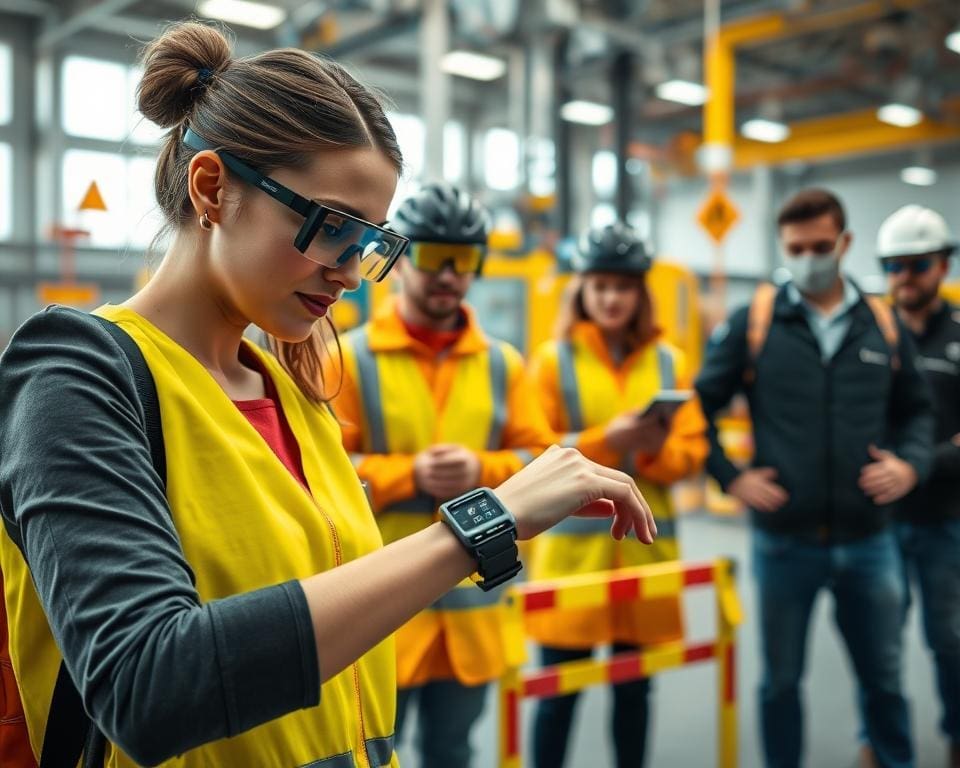
You can equip staff with smart PPE that includes exoskeletons, helmets and high‑visibility vests fitted with sensors. Cat® technology appears on many construction sites, Honeywell supplies wearable sensors for industrial roles, and Garmin or Polar deliver reliable biometric monitors for heart and activity tracking.
These wearable safety devices perform continuous biometric checks to flag fatigue, heat strain or elevated heart rate. They offer fall detection, man‑down alerts and location beacons. Geofencing limits access to dangerous areas and captured data helps with near‑miss analysis.
When you implement wearables, you gain faster intervention times and the evidence to design rest and rotation policies. You can link devices to lone‑worker protection services to meet Health and Safety Executive expectations for vulnerable staff.
Internet of Things (IoT) sensors for hazardous condition detection
IoT workplace sensors cover gas detection, particulate monitoring, vibration and structural health, plus temperature and humidity. You will also see floor and area occupancy sensors used to control access and manage exposure.
Deployments range from fixed installations in factories to portable detectors on vehicles, with mesh networks providing wide area coverage. Industrial platforms such as Siemens MindSphere, Bosch IoT Suite and PTC ThingWorx support device management and data flows.
These sensors give immediate alerts for gas leaks or poor ventilation, trigger preventive maintenance to avoid equipment failure and support long‑term environmental monitoring to protect workers from chronic exposures.
Automated alerting and incident response systems
When a sensor or wearable triggers, incident response systems can escalate automatically via SMS, mobile app notifications or dispatch to on‑site first responders. Services like SmartLog and SoloProtect integrate into monitoring centres for continuous oversight.
Workflows can trigger machine shutdowns, activate ventilation or lock down hazardous zones. Location‑accurate information goes to emergency services to speed rescue and reduce confusion.
Faster, reliable alerting shortens response times and limits escalation. Automated records supply audit trails that support investigations and regulatory reporting.
Implementation considerations
Interoperability, battery life and GDPR compliance must shape your procurement. Secure worker consent and involve unions to build acceptance. Pilot testing clarifies trade‑offs between off‑the‑shelf packages and bespoke systems and helps tune real‑time monitoring to operational needs.
PPE technology choices should align with your safety strategy and complement IoT workplace sensors and incident response systems to form a cohesive protection layer.
How data and analytics drive safer decisions
Data from wearables, IoT sensors, incident reports and maintenance logs becomes the raw material for safer working practices. You can collect HR rosters, training records, lone‑worker check‑ins, permit‑to‑work entries and safety observation reports alongside sensor feeds to build a fuller picture of risk.
To make that picture usable you need integrated safety systems. Centralised safety management platforms, cloud data lakes and APIs or middleware link operational technology and information technology. Solutions such as IBM Maximo and SAP EHS offer integration points that help you bring disparate sources together.
Data quality matters. Inconsistent taxonomies, out-of-sync timestamps and missing metadata will reduce trust in your outputs. You should standardise incident type, severity and root‑cause labels so that occupational risk analytics and reporting are consistent across teams.
Collecting and integrating safety data across systems
Start by mapping sources and required fields. Create an ingestion pipeline that validates records and tags entries with standard metadata. Use field mappings and automated checks to minimise manual correction.
Predictive analytics to anticipate and prevent incidents
Machine learning models, time‑series analysis and anomaly detection convert historical incidents plus live inputs into forecasts. You can predict slips in wet areas by combining weather data, footfall sensors and cleaning schedules.
Shift patterns and wearable biometric data help forecast fatigue‑related risk. Vibration and temperature trends on equipment let you predict failures that could lead to harm. These predictive safety approaches let you act before incidents occur.
Visualising safety trends with dashboards and reports
Role‑based safety dashboards give managers and frontline teams tailored views. You can show leading indicators such as near misses and training completion alongside lagging indicators like injury rates.
Tools like Microsoft Power BI, Tableau and Qlik make it simple to build safety dashboards with predictive risk heatmaps and automated alerts for KPI breaches. Mobile access means supervisors can review trends on site and act faster.
When you combine safety data analytics, predictive safety models and clear visualisation, you improve oversight and speed up decisions. That supports better evidence for regulators, insurers and your workforce without overloading any single team.
Enhancing training and compliance with digital tools
You can use digital learning and compliance tools to make training more practical, auditable and repeatable. New technologies let you practise realistic scenarios, track who has completed required modules and capture clear evidence of safety checks for regulators and insurers.
Virtual reality and simulation for hands-on hazard training
VR safety training creates immersive hazard simulations for construction sites, confined space entry practice, emergency evacuation drills and equipment operation training. Providers such as Immerse, PREDICT ID and British firms running pilot programmes with contractors and utility companies deliver realistic scenarios you can repeat without putting staff at risk.
That hands-on experience improves knowledge retention and builds safety competence for high-risk, low-frequency events. You should weigh equipment cost, motion sickness mitigation and scenario realism when integrating simulations with your competency frameworks.
eLearning platforms and microlearning for ongoing competence
Use learning management systems to deliver mandatory HSE modules, role-specific courses and short microlearning bursts that fit shift patterns. eLearning health and safety modules are scalable and let you track completion for compliance.
Mobile apps give just-in-time refreshers and personalised learning paths that link to HR records and performance history. Short, targeted content helps embed safe behaviours and supports regular assessment of safety competence.
Digital checklists and compliance tracking to reduce human error
Digital checklists streamline pre-start inspections, permit closure, machine safety checks and daily site walks. Many tools integrate with safety management platforms to capture structured data, timestamped evidence and photos for each issue.
Compliance tracking automates escalation, creates audit trails and speeds remedial action. That reduces human error, improves consistency in inspections and supplies the documented proof that auditors and insurers often require.
For these tools to succeed you need leadership buy-in, clear communication and user-friendly design. Link training outcomes to performance reviews and safety KPIs to encourage adoption and keep your workforce focused on measurable safety competence.
Automation, robotics and remote operations improving risk control
You can reduce exposure to danger by replacing hazardous tasks with automation and robotics. In manufacturing, robotic welders and palletisers from vendors such as ABB, FANUC and KUKA handle repetitive work that commonly causes musculoskeletal injury. In warehouses, autonomous guided vehicles (AGVs) and autonomous mobile robots (AMRs) move stock without human carriers, cutting manual handling risks and improving automation safety across shifts.
On construction sites, offshore platforms and confined spaces, remote‑controlled demolition and inspection robots, plus inspection bots from Boston Dynamics, perform entry into contaminated or unstable areas. These robotics for hazard control operate where people should not, offering consistent, programmable safety behaviours and the ability to log actions for audit and compliance. Unmanned site operations also let you run longer, safer surveys with less interruption to your workforce.
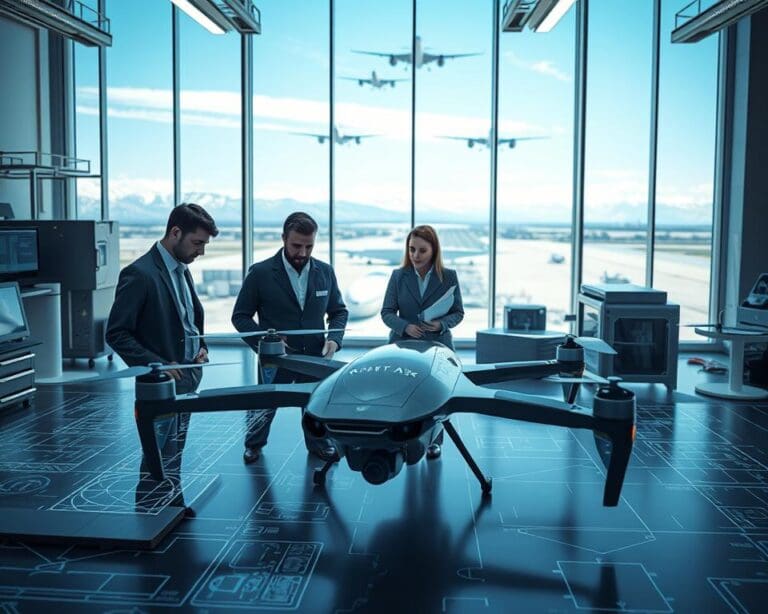
Remote operations and telepresence broaden those gains. Drones provide rapid aerial inspections of roofs and infrastructure, while remote monitoring and control of cranes or plant reduce the need for staff in high‑risk zones. Live video and sensor feeds speed decision‑making, and telesupervision lets specialists guide front‑line staff from a safe location, improving response times during incidents.
To keep those systems safe you must follow functional safety standards such as IEC 61508 and ISO 13849, perform thorough risk assessments for human‑robot interaction, and fit safeguards like light curtains and safety PLCs. Cyber‑security for control systems, updated procedures and new training are essential as technicians and engineers gain responsibilities for configuration and maintenance. When combined with wearables, IoT sensors, analytics and digital training, automation safety and unmanned site operations deliver measurable reductions in incidents, lower longer‑term costs and greater resilience for your workplace under UK regulations.