If you shop in the United Kingdom, you already encounter in-store retail technology that shapes how you browse, pay and leave satisfied.
This piece maps the leading store tech solutions you’re likely to meet: digital signage, mobile payments, beacons, interactive kiosks, computer vision, RFID and inventory management systems, plus self-checkout and scan-and-go.
We focus on retail technology UK examples so the picture feels familiar. Tesco has trialled scan-and-go, Sainsbury’s has expanded self-checkout and contactless options, Marks & Spencer uses digital displays, and John Lewis experiments with interactive in-store experiences.
The aim is practical: you’ll learn what in-store shopping innovations are, how retail experience technology improves convenience and engagement, and which tools boost efficiency and sales for retailers.
The article then moves from an overview and benefits to deep dives on personalisation tools, checkout and queue innovations, and inventory and operations hardware. Each section builds so you gain a complete, actionable view of current and near-term developments.
Overview of in-store retail technology and its benefits
The rise of in-store retail technology has changed how you shop and how retailers run stores. This section explains what is in-store retail technology, outlines the benefits of in-store tech for shoppers and retailers, and shows how systems link online and offline channels to support omnichannel retail.
Defining in-store retail technology
In-store retail technology covers hardware, software and networked systems installed in physical shops to support shopping, merchandising, operations and analytics.
Hardware examples include digital signage, tablets, interactive kiosks, mobile POS terminals, RFID readers, shelf sensors, cameras for computer vision and handheld scanners.
Software and platforms include customer data platforms, mobile apps, loyalty systems, point-of-sale software, inventory management, workforce scheduling tools and analytics dashboards.
These systems commonly integrate with e-commerce platforms, CRM and ERP systems to give a unified data set and single customer view.
Key benefits for shoppers and retailers
For you as a shopper, the benefits of in-store tech show up as faster, more convenient payments and personalised offers. You see clearer product information, better stock visibility and shorter wait times.
Retailers gain improved conversion rates and higher average order values through targeted promotions. Real-time inventory reduces out-of-stock incidents and shrink. Staff productivity improves and richer behaviour data supports smarter merchandising.
Operational advantages include more accurate demand forecasting, streamlined replenishment and efficient queue and labour management. Analytics-driven layout changes can boost sales per square metre.
How technology bridges online and offline experiences
Omnichannel retail relies on seamless integration between store systems and online platforms. Click-and-collect, ship-from-store and reserve-in-store all need connected systems to work reliably.
Personalisation continuity comes from loyalty accounts and mobile apps that tie in-store behaviour to online profiles so you receive consistent offers and recommendations across channels.
Unified inventory and search let you check stock via a website or app before visiting. In-store kiosks can access the same catalogue and fulfilment options to complete purchases on the spot.
UK retailers such as John Lewis and Marks & Spencer have integrated online accounts with in-store kiosks and apps to deliver personalised promotions and smoother fulfilment, illustrating the retail digital transformation in practice.
Personalisation and customer engagement tools
Retailers now use a mix of data and in-store tech to make your visits feel tailored. You expect offers that match your history and displays that respond to your interests. The tools below explain how shops create those moments while staying within UK data rules.
A customer data platform retail solution pulls together first-party records from tills, apps and web visits to form a single profile for you. When you scan a loyalty card or log into an app, the store can present offers based on past purchases and browsing. Boots Advantage Card and Tesco Clubcard show how loyalty integration turns profiles into targeted promotions and bespoke coupons.
For you that means fewer irrelevant discounts and more value. For staff it reduces guesswork. Shops must link POS, e-commerce, CRM and loyalty systems and follow UK GDPR, so you see clear consent prompts and secure handling of your data.
Beacons retail and proximity marketing UK
Beacons retail devices use Bluetooth Low Energy to alert your phone when you are near specific aisles or products. A targeted push can announce a time-limited deal or a coupon tied to an item you looked at online. Pilots in UK shopping centres have used this to raise dwell time and increase basket size.
You must opt in via an app and manage notification frequency to avoid annoyance. Relevance and timing are the keys to making these alerts useful rather than intrusive.
Interactive retail displays
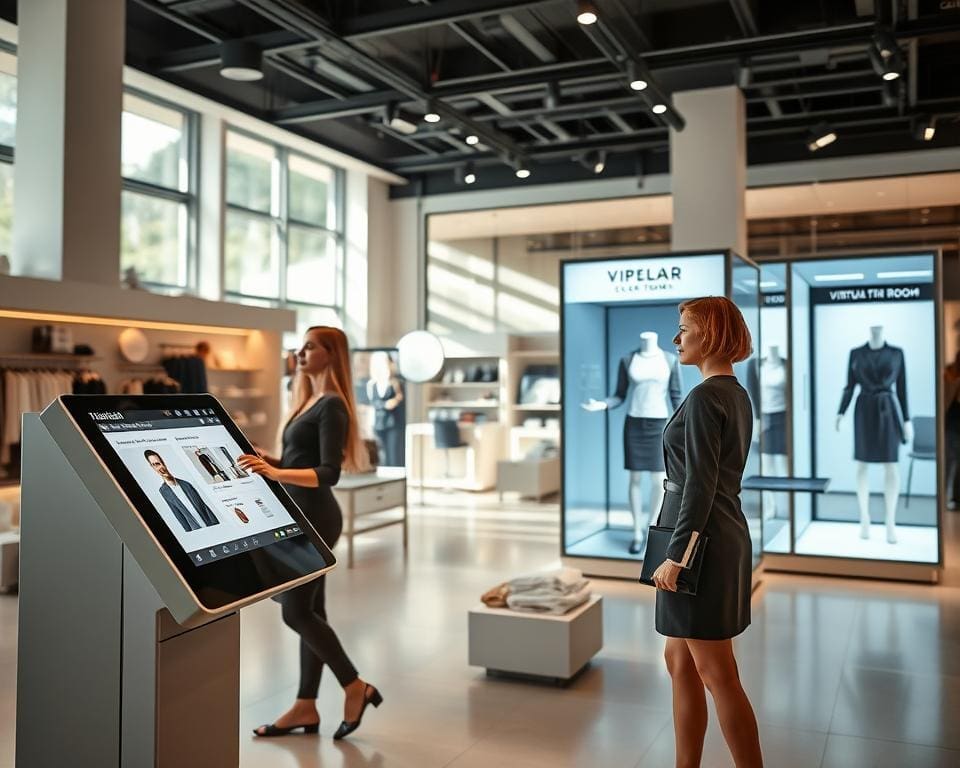
Interactive retail displays range from kiosks and touchscreen catalogues to virtual mirrors and product customisation stations. You can try on looks with augmented reality, browse full ranges that are not on shelf, or configure a product for immediate order.
These touchscreens reduce the strain on staff, collect interaction data for merchandising and extend the store’s visible SKU list. Department stores and beauty brands use AR mirrors and kiosks to help you make decisions faster and with more confidence.
- Combine CDPs with interactive displays to serve product suggestions when you tap a kiosk.
- Use beacons with loyalty data to send offers the moment you enter a zone.
- Gather consented interaction data to refine in-store journeys and stock choices.
Checkout, payment and queue-reduction innovations
You expect fast, secure and frictionless payment at the till. Retailers adopt a mix of technologies to cut wait times, boost throughput and keep shoppers satisfied. This section outlines the main options you will encounter on the high street and in supermarkets.
Contactless payments and mobile wallets
Contactless card use and mobile wallets UK solutions such as Apple Pay, Google Pay and Samsung Pay let you complete purchases in seconds. Limits for tap payments in the UK have risen, so you can use contactless retail payments for more everyday spends than before.
Tokenisation and biometric checks on phones make these transactions secure. Retailers see faster throughput at tills and a reduced need for cash handling, which improves hygiene and speed during busy times.
Self-checkout, mobile scan-and-go and unattended payments
Self-checkout solutions use fixed kiosks where you scan, bag and pay. They reduce staffing needs and shorten queues when monitored properly.
Scan-and-go apps let you scan items as you walk the aisles and pay on your phone. Grocers such as Tesco have trialled this method to give a frictionless exit and personalised offers while you shop.
Unattended systems, like cashierless stores and smart carts, charge your account automatically on exit using sensors and computer vision. Pilots exist in the UK, but cost and privacy remain barriers to full rollouts.
Retailers must balance convenience with theft prevention, accessibility and integration with loyalty and receipts.
Queue management systems and virtual waitlists
Queue management retail tools use cameras and sensors to measure footfall and predict wait times. You can join a virtual waitlist via an app or kiosk and receive an SMS when it is your turn.
This approach frees you to browse or shop elsewhere while you wait. Stores such as optical chains and mobile-phone retailers use appointment-style queuing to smooth peak demand and improve service.
For retailers, these systems help allocate staff more efficiently and provide moments to send targeted offers or information during dwell time.
Inventory, store operations and experience-enhancing hardware
You can cut shrink and speed up replenishment by using inventory management retail systems that connect RFID retail UK tags, electronic shelf labels and shelf sensors to a central platform. RFID offers near real-time tracking of items, making stocktakes faster and reducing out-of-stock events in fashion and large-format stores. Electronic shelf labels let you update prices and promotions centrally, so pricing stays consistent and staff spend less time on manual changes.
Computer vision retail solutions and smart cameras give you anonymous shopper counting, heatmapping and basket analysis. These insights show where customers linger and which displays work, so you can optimise layout and staff deployment based on behaviour rather than guesswork. At the same time, privacy-by-design and clear signage are essential to meet UK data-protection rules and keep shoppers informed.
Experience-enhancing hardware such as smart fitting rooms, kiosks and mobile POS devices improves service and conversion. RFID-enabled mirrors can suggest sizes or complementary items, while kiosks and fulfilment stations let customers order out-of-stock goods for home delivery or ship-from-store. Mobile POS and handheld staff devices enable assisted selling, quick price checks and faster payments, easing queue pressure.
Back-of-house automation and store operations technology like robotic stock movers and in-store micro-fulfilment reduce fulfilment times and errors, but you should weigh initial hardware and integration costs against long-term returns. Pilot projects, staff training and clear customer communication help adoption. Looking ahead, expect tighter real-time synchronisation across channels and wider use of AI-driven analytics to make inventory and operations even smarter.