The Sunday roast: a British tradition worth discovering is more than a plate of meat, potatoes and gravy. It is a weekly ritual built around comfort, conversation and the pleasure of sharing a generous meal. Found in family homes, pubs and restaurants across the UK, the Sunday roast brings together familiar flavours with a sense of occasion. Whether served with beef, chicken, lamb, pork or a vegetarian centrepiece, it remains one of the most recognisable parts of British food culture.
Sunday roast: a British tradition worth discovering at the heart of the weekend
A Sunday roast is traditionally eaten on Sunday, often around lunchtime or in the early afternoon. Its roots are linked with Christian patterns of worship, family gatherings and the practical rhythm of cooking a large joint of meat for the household. Over time, it became a comforting weekend custom rather than only a religious or formal meal.
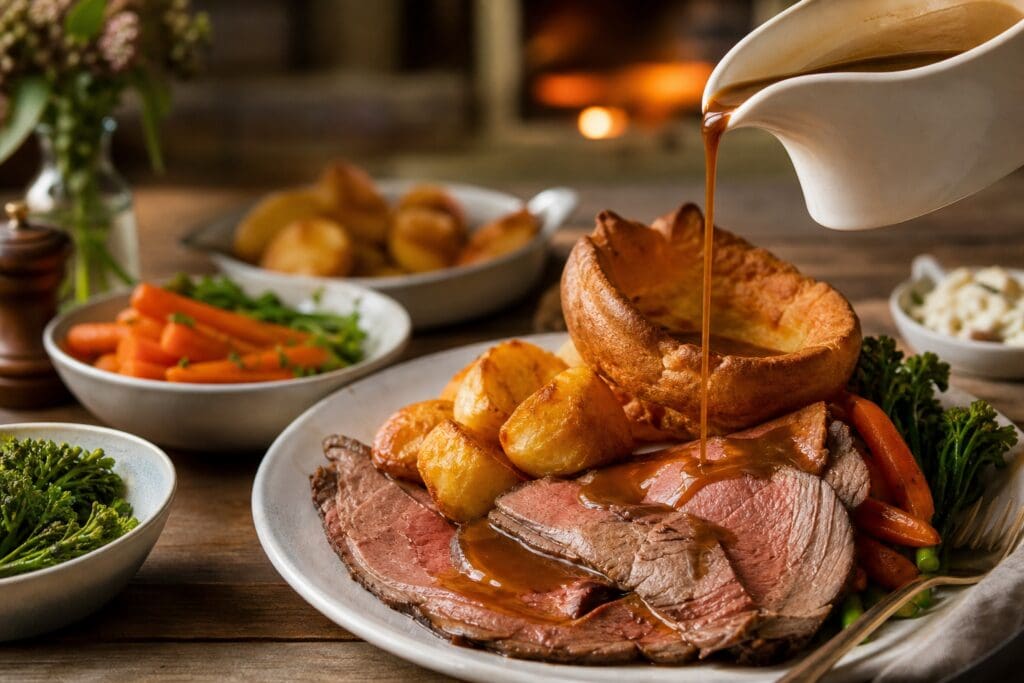
What makes the roast distinctive is not just the main ingredient. It is the combination of textures and flavours: crisp roast potatoes, rich gravy, seasonal vegetables and a centrepiece that feels worth gathering around. The plate is generous but balanced, with savoury depth, sweetness from vegetables and a welcome crunch from well-roasted edges.
In many homes, the Sunday roast also carries emotional weight. It may remind people of grandparents’ kitchens, busy family tables or quiet afternoons after a long week. In pubs, it offers a similar feeling: hearty food, relaxed surroundings and a sense that Sunday has a slower pace than the rest of the week.
What is usually on a Sunday roast plate?
Although every household has its own habits, a classic Sunday roast usually includes a roasted main, potatoes, vegetables and gravy. The joy of the dish is that it is flexible. It can be traditional, modern, simple or quite elaborate, depending on taste and occasion.
Common elements include:
- Roast meat or a vegetarian centrepiece, such as beef, chicken, lamb, pork, nut roast or a vegetable wellington.
- Roast potatoes, ideally crisp on the outside and fluffy in the middle.
- Gravy, made from meat juices, vegetable stock or a rich plant-based base.
- Seasonal vegetables, such as carrots, peas, cabbage, parsnips, broccoli or cauliflower.
- Yorkshire puddings, especially with beef, though many people enjoy them with any roast.
- Condiments, including horseradish sauce, mint sauce, apple sauce, mustard or bread sauce.
A good roast plate should feel abundant without being chaotic. Each part has a job. Potatoes bring crunch, gravy ties everything together, vegetables add colour, and the main dish provides the savoury centre.
Roast beef and Yorkshire pudding
Roast beef is one of the most famous versions of the Sunday roast. It is often served with Yorkshire pudding, a baked batter that puffs up in the oven and becomes crisp around the edges. The soft centre catches gravy beautifully, making it one of the most loved parts of the meal.
Traditional accompaniments for beef often include horseradish sauce, roast potatoes, carrots and greens. Some cooks prefer beef served pink, while others like it cooked through. Both styles can be part of a proper Sunday roast, provided the meat is rested and carved with care.
Roast chicken, lamb and pork
Roast chicken is perhaps the most approachable option. It is easy to share, works well with many herbs and pairs naturally with bread sauce, stuffing, roast vegetables and plenty of gravy. A well-roasted chicken can feel both homely and special.
Lamb is often associated with mint sauce, rosemary and spring vegetables, although it is enjoyed throughout the year. Its deeper flavour suits garlic, root vegetables and rich gravy.
Pork brings its own pleasures, especially when served with crisp crackling. Apple sauce is a classic partner, offering sweetness and sharpness against the richness of the meat. Good crackling takes attention, but for many people it is the prize piece on the plate.
Vegetarian and vegan Sunday roasts
A vegetarian or vegan roast can be every bit as satisfying as a meat-based one. The centrepiece might be a nut roast, lentil loaf, mushroom wellington, stuffed squash or roasted cauliflower. The key is to build flavour through herbs, caramelised vegetables, savoury sauces and thoughtful seasoning.
Plant-based gravy is especially important. A rich gravy made with onions, mushrooms, vegetable stock, herbs and a little flour or cornflour can bring the whole plate together. Roast potatoes, vegetables and Yorkshire-style puddings can also be adapted with suitable ingredients.
The art of potatoes, gravy and vegetables
The supporting parts of a Sunday roast are often where the strongest opinions appear. Some people judge the whole meal by the potatoes. Others care most about the gravy. Many insist that vegetables should not be an afterthought. In truth, all three matter.
Roast potatoes are usually parboiled first, then shaken slightly to roughen their edges before roasting in hot fat or oil. This helps create the classic crisp shell. The inside should stay soft and light. Maris Piper and King Edward potatoes are popular choices in the UK because they roast well.
Gravy may be made from roasting juices, stock and a thickening ingredient. For deeper flavour, cooks often add onions, herbs or a splash of wine. A good gravy should be smooth, savoury and plentiful. It should coat the food rather than drown it.
Vegetables vary by season and preference. Carrots, parsnips and swede bring sweetness. Cabbage, kale and broccoli add freshness and colour. Cauliflower cheese is not universal, but it is a much-loved addition in many households. The best vegetables are cooked with care, not boiled into blandness.
Why the Sunday roast matters in British culture
Food traditions survive when they meet a deeper need. The Sunday roast endures because it offers structure, comfort and togetherness. It marks the end of one week and the quiet beginning of another. Even when people no longer eat it every Sunday, it still feels connected to leisure and family time.
There is also a practical side. A roast can feed several people, and leftovers can be used in sandwiches, soups, pies or bubble and squeak. This thriftiness has long been part of British home cooking. Nothing needs to feel wasted when the remains of a roast become another meal.
The Sunday roast also belongs to pub culture. Many British pubs serve roast dinners on Sundays, often with a choice of meats and a vegetarian option. The pub roast has become a relaxed way to enjoy the tradition without cooking at home. It can be casual, sociable and warming, especially during colder months.
At its best, the Sunday roast is not about perfection. It is about generosity. Slightly wonky Yorkshire puddings, unevenly cut carrots or a gravy boat that empties too quickly all belong to the experience. The meal works because it feels human.
How to recognise a well-made Sunday roast
A well-made roast dinner has balance. It should not be dry, greasy or one-note. The different parts should work together, with enough contrast to keep the meal interesting from first bite to last.
Look for these signs of quality:
- Crisp roast potatoes with fluffy centres and golden, rough edges.
- Gravy with depth, not just saltiness or colour.
- Meat or centrepiece cooked with care, rested properly and seasoned well.
- Vegetables that still have character, whether roasted, steamed or dressed with butter or herbs.
- Yorkshire puddings that are light and risen, not heavy or soggy.
- Good temperature across the plate, so the meal arrives warm and comforting.
Portion size matters too. A roast should be generous, but it should still feel enjoyable rather than overwhelming. The best versions leave room to appreciate each element.
Regional habits and personal touches
There is no single official Sunday roast. Across the UK, different families and regions add their own preferences. Some tables always include stuffing, even when there is no chicken. Others serve mashed potatoes alongside roast potatoes. Some households consider cauliflower cheese essential, while others never include it.
Condiments also reveal personal loyalties. Beef often meets horseradish, lamb meets mint sauce, pork meets apple sauce and chicken meets bread sauce or cranberry sauce. These pairings are traditional, but not strict rules. Many people mix them freely according to taste.
Seasonality plays a role too. In autumn and winter, root vegetables, darker greens and richer gravies feel natural. In spring, lamb, peas, carrots and lighter herbs may take over. Summer roasts can be lighter, with salads or simply cooked vegetables alongside the main event.
The Sunday roast is traditional because it is familiar, but it stays alive because people adapt it.
Common mistakes to avoid
Even experienced cooks can struggle with timing, as a roast has several moving parts. The trick is to plan backwards from serving time and give the main dish time to rest.
Common mistakes include:
- Starting the potatoes too late, leaving them pale or under-crisped.
- Forgetting to rest the meat, which can make carving harder and the texture less tender.
- Making too little gravy, a serious issue on many British tables.
- Overcooking the vegetables, which removes colour, texture and flavour.
- Opening the oven too often, especially when Yorkshire puddings are rising.
- Serving everything on cold plates, which cools the meal too quickly.
A roast does not need complicated techniques, but it does reward calm preparation. Small details make a clear difference.
Frequently Asked Questions
What makes a Sunday roast different from a normal roast dinner?
A Sunday roast is tied to the British weekend tradition of gathering for a generous roast meal. While the ingredients may resemble any roast dinner, the timing, ritual and shared setting make it distinctive.
Do Sunday roasts always include Yorkshire puddings?
No, Yorkshire puddings are not compulsory, but they are strongly associated with roast beef. Many people now enjoy them with chicken, lamb, pork or vegetarian roasts as well.
Can a Sunday roast be vegetarian or vegan?
Yes, a Sunday roast can be vegetarian or vegan with a suitable centrepiece and gravy. Roast potatoes, seasonal vegetables and plant-based puddings can make the meal hearty and traditional in spirit.
What is the best time to eat a Sunday roast?
Many people eat a Sunday roast at lunchtime or in the early afternoon. However, there is no strict rule, and some households prefer it as an early evening meal.
Is a pub Sunday roast the same as a home-cooked one?
A pub Sunday roast follows the same general format, but the atmosphere is different. Home roasts often feel personal and nostalgic, while pub roasts offer convenience and a sociable setting.
A tradition built on comfort
The Sunday roast remains one of Britain’s most cherished food traditions because it brings together flavour, warmth and familiarity. It can be grand or simple, meaty or plant-based, carefully planned or happily imperfect. What matters most is the shared pleasure of a meal that feels substantial and comforting.
For anyone interested in British food culture, the Sunday roast is worth understanding. It tells a story of home cooking, seasonal ingredients, family habits and pub hospitality. Above all, it shows how a plate of well-cooked food can become a tradition people return to again and again.