A proper Italian risotto is creamy because of the rice, the stirring, the gradual addition of hot stock, and the final finish with fat and cheese. If you have ever wondered, “What makes a proper Italian risotto so creamy?”, the answer is not double cream. In traditional risotto, the texture comes from starch released by short-grain rice, helped along by patient cooking and careful timing.
What makes a proper Italian risotto so creamy? The short answer
The creaminess of risotto is built in layers. First, the right rice is used. Italian risotto rice, such as Arborio, Carnaroli or Vialone Nano, contains plenty of starch. As the grains cook, they release some of that starch into the liquid, creating a glossy sauce around the rice.
Second, the liquid is added gradually. Instead of boiling rice in a large pan of water, risotto is cooked with ladles of hot stock. Each addition is stirred into the rice before more is added. This encourages the grains to rub gently against each other, helping the starch loosen and thicken the mixture.
Third, the risotto is finished with a process often called mantecatura. This means beating in butter and finely grated cheese off the heat. The result should be loose, shiny and creamy, not stiff or gluey.
Creaminess, then, is not a shortcut ingredient. It is the result of technique.
The rice is the real foundation
Risotto starts with rice that behaves differently from the long-grain rice often used for pilau, curry or stir-fry dishes. Long-grain rice is prized for staying separate and fluffy. Risotto rice is chosen because it can absorb liquid while still releasing starch.
The aim is a dish that is creamy around the grains, while each grain keeps a slight bite at the centre. In Italian cooking, this texture is often described as al dente. It means the rice should not be chalky, but it should not collapse into mush either.
Why short-grain rice matters
Short and medium-grain Italian rice varieties have a high starch content. They also have a shape that suits risotto cooking. The grains are plump, so they can absorb flavour from the stock, wine and aromatics without breaking down too quickly.
Common risotto rice varieties include:
- Arborio: widely available in UK supermarkets, with large grains and a good creamy finish.
- Carnaroli: often valued by cooks because it holds its shape well during longer cooking.
- Vialone Nano: smaller-grained, with excellent absorption and a naturally creamy result.
Each variety can make a fine risotto, but they are not identical. Arborio is forgiving and easy to find. Carnaroli is a favourite for a more controlled texture. Vialone Nano can give a particularly soft, flowing finish when handled carefully.
Why rinsing is usually avoided
Many rice dishes begin with rinsing, but risotto is different. Washing risotto rice can remove surface starch, which is exactly what helps create the sauce. For that reason, risotto rice is usually added straight to the pan.
This does not mean the risotto should become heavy or sticky. The goal is not to release every bit of starch in the grain. It is to coax enough starch into the stock to bind the dish, while keeping the rice lively and separate enough to eat with pleasure.
The cooking method creates the sauce
A creamy risotto is not simply cooked; it is managed. The liquid, heat and movement all matter. None of these steps needs to feel complicated, but each one affects the final texture.
The classic method begins with a base of onion or shallot softened in butter or oil. The rice is then toasted briefly in the fat. This step is often called tostatura. It coats the grains and warms them through, helping them cook evenly once liquid is added.
Wine is commonly added next and allowed to reduce. It brings acidity and depth, but it should not dominate. Once the wine has mostly evaporated, hot stock is added a ladleful at a time.
The role of gradual stock
Adding stock slowly gives the cook control. The rice absorbs liquid little by little, and the pan never becomes a soup. As the rice is stirred, it releases starch into the stock already in the pan, forming a creamy coating.
The stock should be hot. If cold stock is added, the temperature in the pan drops, interrupting the cooking and making the timing less reliable. A gentle simmer is better than a fierce boil. Too much heat can make the outside of the grains soften before the centre is properly cooked.
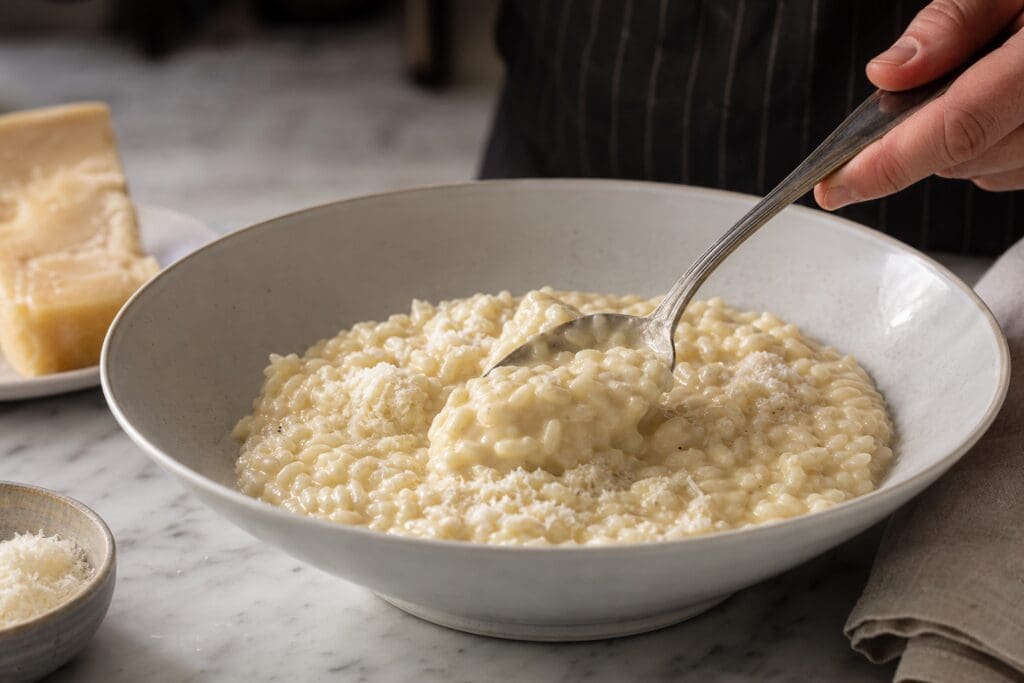
Good risotto should move when the pan is tilted. It should not sit in a mound. Italians sometimes describe the ideal texture as flowing like a wave, known as all’onda. This is a helpful image: creamy, loose and glossy, not dry.
Stirring: enough, but not endlessly
Stirring helps risotto become creamy, but it does not require frantic attention every second. Gentle, regular stirring is enough. The grains need movement so they release starch and cook evenly, but overworking them can make the risotto heavy.
A good rhythm is to stir after each ladle of stock, then keep an eye on the pan as the liquid reduces. When the spoon leaves a brief path through the rice and the mixture looks thick rather than watery, it is time to add more stock.
The cook’s judgement matters more than a strict timer. Rice varieties, pan size and heat levels all change the pace. Tasting is the most reliable guide.
Butter, cheese and the final creamy finish
The last stage is where good risotto becomes luxurious. Once the rice is cooked but still slightly firm, the pan is taken off the heat. Butter and grated cheese are then stirred in firmly. This is not just seasoning; it is an emulsion.
An emulsion brings fat and liquid together into a smooth, unified sauce. The starch in the risotto helps this happen. Butter adds gloss and softness. Parmesan-style hard cheese adds savoury depth, saltiness and body.
The risotto should rest briefly after the final stir. This pause lets the texture settle. If it looks too thick, a splash of hot stock can loosen it. If it looks soupy, a short rest may help it thicken.
Cream is not normally needed. Some modern recipes use it, but in a proper Italian risotto the creamy texture comes from rice starch, stock and finishing technique. Adding cream can dull the flavour and make the dish feel heavier than intended.
Common mistakes that stop risotto being creamy
Even with the right ingredients, a few small errors can lead to a risotto that is dry, stodgy or unevenly cooked. The good news is that most are easy to avoid.
Watch out for these common problems:
- Using the wrong rice: long-grain rice will not release starch in the same way.
- Adding too much liquid at once: the rice may boil rather than gradually absorb flavour.
- Cooking on very high heat: the outside can soften too fast while the centre stays hard.
- Not tasting near the end: risotto changes quickly in the final minutes.
- Skipping the final butter and cheese: the dish may lack gloss and roundness.
- Letting it stand too long before serving: risotto thickens as it cools.
A useful way to think about risotto is that it should be served at its peak. Unlike a casserole, it does not improve by waiting around. It is at its best when freshly finished, still fluid and warm.
Flavour supports texture
Creaminess is not only about mouthfeel. A well-made risotto tastes balanced. The stock should suit the main ingredient, whether that is mushroom, seafood, squash, saffron or asparagus. A delicate vegetable risotto can be overwhelmed by a very strong stock, while a mushroom risotto can take something deeper.
Salt should be handled with care, especially when cheese is added at the end. Taste before seasoning heavily. A risotto that is too salty will feel less refined, even if the texture is correct.
Acidity also matters. A little wine near the start can stop the dish tasting flat. In some risottos, a small squeeze of lemon or a touch of zest at the end can brighten the richness, though this depends on the recipe.
The best risotto has contrast: creamy sauce, distinct grains, savoury depth and a fresh lift. That balance is why the dish feels comforting without being clumsy.
Frequently Asked Questions
Does proper Italian risotto contain cream?
Usually, no. Traditional risotto gets its creamy texture from rice starch, gradual cooking, butter and cheese. Cream may appear in some modern versions, but it is not the classic reason risotto becomes creamy.
Which rice is best for a creamy risotto?
Arborio, Carnaroli and Vialone Nano are all suitable choices for creamy risotto. Arborio is easy to find, while Carnaroli holds its texture particularly well. The key is using proper risotto rice, not long-grain rice.
How often should risotto be stirred?
Risotto should be stirred regularly, especially after each addition of stock. It does not need constant frantic stirring, but it should not be ignored. Gentle movement helps release starch and keeps the cooking even.
Why did my risotto turn gluey?
Risotto can become gluey if it is overcooked, stirred too aggressively, or made with too little liquid near the end. It may also thicken too much if left standing before serving. A little hot stock can sometimes loosen it.
Should risotto be thick or runny?
Risotto should be creamy and loose, not watery and not stiff. When spooned onto a plate, it should spread gently rather than sit in a solid heap. The ideal texture is glossy, soft and flowing.
The creamy secret is patience, not cream
So, what makes a proper Italian risotto so creamy? It is the combination of starchy rice, hot stock, measured stirring and a careful finish with butter and cheese. Each stage builds the texture gradually.
The dish rewards attention, but it is not mysterious. Choose the right rice, keep the stock hot, add it little by little, and finish the risotto while it is still loose and glossy. The result is the kind of creaminess that feels deeply satisfying because it comes from the rice itself.