When you set out to choose a new front door, you need a clear sense of purpose. This short section explains the key new front door considerations so you know what to expect on style, security, energy performance and practicalities.
Think about the main decision areas: aesthetic fit, material selection, security features, thermal efficiency, glazing, seals and thresholds, maintenance, budget and installation. Each matters in a different way — material affects longevity and insulation, glazing affects light and U-value, and locks determine security.
Use this front door buying guide step by step. Start by assessing your home’s style and needs, then set a realistic budget. Research materials and recognised security standards, compare U-values, and plan for professional installation and aftercare. Note existing door measurements, any planning restrictions such as conservation areas or listed building rules, and how long you want the door to last.
Bear in mind basic UK legal and regulatory points. Replacement doors in the thermal envelope may need to meet Building Regulations for energy performance. Listed properties and conservation areas can require planning permission. Look for standards such as Secured by Design as an indicator of trusted security performance.
For technical data, consult manufacturers and trade bodies. Reputable UK suppliers and brands, independent testers and consumer groups like Which? and the Energy Saving Trust offer useful guidance on performance and testing. Keep these front door tips in mind as you read the rest of this front door replacement UK guide.
How to choose a new front door that suits your home
Choosing a new front door blends style, context and practical choices. Start by noting your home’s period and key features so you can aim for front door style that feels right for the property. Small, deliberate steps make it easier to balance appearance and function before you commit.
Assessing your home’s architectural style
Identify whether your home is Georgian, Victorian, Edwardian, interwar or modern. Look for panel patterns, fanlights, sidelights and mouldings that define the era. Those details guide which architectural front doors will suit the house.
For period properties choose traditional panelled timbers or timber-look composites to match original features. For contemporary homes consider minimalist aluminium or smooth composite designs with clean lines and integrated hardware for a coherent front door design matching the rest of the façade.
If your home lies in a conservation area or it is listed you may need to follow specific rules. Consult the local planning authority about permitted materials and retained proportions before ordering.
Matching colours and finishes to exterior features
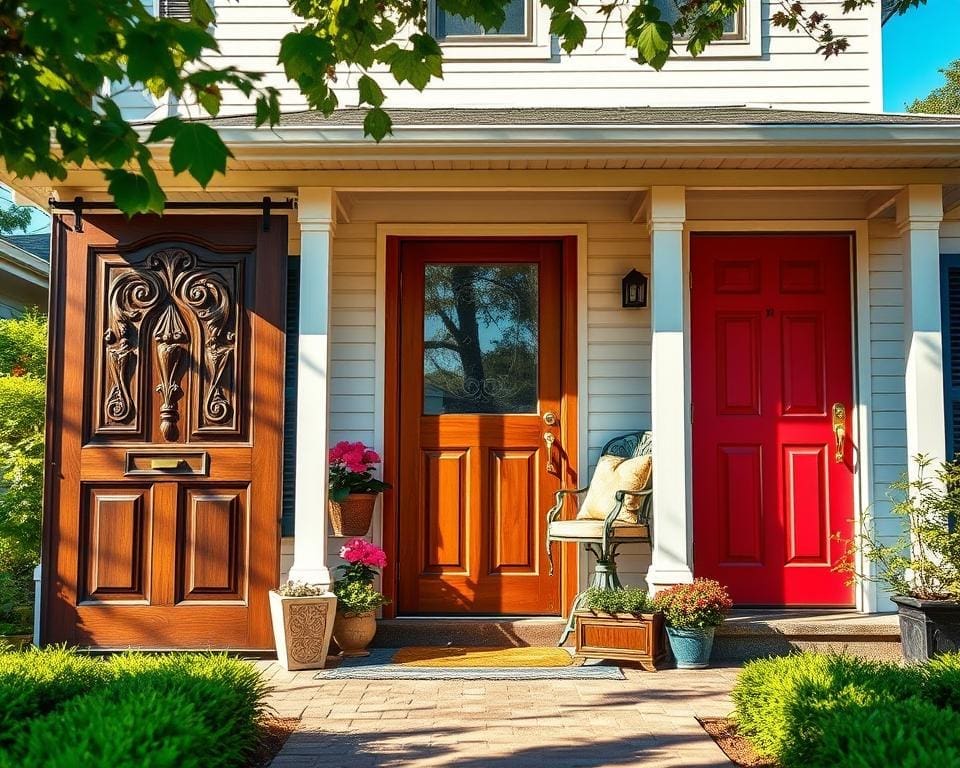
Coordinate door colour ideas with brickwork, render, window frames and roof tiles. Deep blues, reds and greens work well with brick frontages. Muted greys and pastels suit rendered façades and softer palettes.
Pick finish types to suit maintenance and style. Painted timber gives a traditional look. Foil-finish uPVC reduces upkeep. Polyester-coated aluminium provides durable colour fastness. Stained timber showcases natural grain on older homes.
Remember practical points: darker colours absorb heat and may fade on exposed façades. Specialist exterior paints and factory-coloured options such as RAL-matched finishes deliver longer-lasting results.
Considering proportion, scale and visual impact
Pay attention to door height, width and glazing proportions so the entrance balances with the rest of the façade. A narrow or over-ornate door can look out of place and harm kerb appeal.
Follow simple rules of thumb. Keep existing opening proportions where possible. Add sidelights or a fanlight to increase presence without rebuilding. For wide openings consider double doors or a broader single door to preserve door proportion and scale.
Use hardware, glazing patterns and colour contrast as focal points to shape visual impact. Try samples and full-size mock-ups. Photograph the façade with proposed colours to help you visualise final results and confirm your front door design matching the home.
Security and durability considerations for your new front door
Choosing a front door means balancing safety, longevity and day-to-day care. You want a secure front door UK homeowners can rely on, plus finishes that hold up to weather and wear. Start by checking locks, hardware standards and the core construction before you decide.
Locking systems and multi-point locks
Multi-point locks secure at the top, bottom and centre with one lift-and-turn action. Insurers often prefer these systems for improved protection. Look for British Standard BS EN 12209 and endorsements such as Secured by Design or Sold Secure when selecting mechanisms.
Complement multi-point locks with anti-snap cylinder locks, reinforced strike plates and hinge bolts for outward-opening doors. Smart locks and video doorbells add convenience and audit trails, yet they need correct installation and may affect insurance terms. Ask your insurer if a particular electronic solution meets their requirements before fitting.
Material strength: timber, composite, uPVC, aluminium
Timber gives a natural look and is simple to repair. Hardwoods or pressure-treated softwoods resist rot when you maintain them with regular painting or staining. Timber suits period homes where appearance matters.
Composite doors use engineered cores with GRP skins or solid timber cores. They resist warping and provide good thermal and security performance with little upkeep. Well-known manufacturers often build composite doors to high-security standards.
uPVC is cost-effective and low-maintenance. Basic uPVC can be less robust than other options. Choose reinforced frames with steel or aluminium cores for greater strength if you prefer uPVC’s ease of care.
Aluminium offers the best strength-to-weight ratio and slim sightlines for contemporary designs. Thermally-broken aluminium systems combine strong security with good insulation and require minimal maintenance.
Select materials based on local climate, the level of front door security you need and how much maintenance you will accept.
Impact resistance, weatherproofing and maintenance needs
Impact resistance depends on core build and skin materials. Composite and aluminium doors generally resist forced entry and denting better than standard uPVC. Check manufacturer test data where available.
Door weatherproofing uses effective thresholds, gaskets and seals to stop water ingress. Drainage channels in frames and corrosion-resistant hardware are essential in coastal areas. Design details such as overhangs and glazing placement reduce exposure to wind-driven rain.
Maintenance expectations vary. Timber needs regular inspection and redecorating. Composite and aluminium demand only occasional cleaning and lubrication of moving parts. uPVC requires minimal care, though it can discolour over decades.
Check warranties on frames, skins and hardware and confirm any security conditions your insurer requires. Proper installation and certified locking systems help keep your policy valid and your home protected.
Energy efficiency and insulation when you choose a new front door
Choosing a new front door affects more than appearance. It changes your home’s thermal performance and running costs. Good front door energy efficiency means less heat loss and a warmer hallway all year round.
Start with the door U-value. The door U-value measures heat flow through the door; lower numbers are better. Modern insulated front doors and thermally-broken aluminium options can achieve U-values around or below 1.0 W/m²K. Older single-skin doors often show much higher figures and add to heat loss.
UK guidance points to improving thermal performance alongside loft and wall insulation. For precise compliance, consult Building Regulations Part L when you change doors in a property subject to those rules.
Glazing makes a big difference to comfort and light. Double glazing doors are the standard choice for most homes. Triple glazing and low-emissivity coatings raise insulation further. Warm-edge spacer bars and inert gas fills such as argon or krypton reduce heat transfer through glazed units.
Keep glazed areas balanced. Larger panels boost daylight but can increase the overall U-value unless you specify high-performance units. For privacy at the side or above the door, patterned or obscured glass offers a neat compromise.
Seals and thresholds complete the insulation story. Perimeter seals, compression gaskets and effective thresholds stop cold air and water entering. An adjustable, weatherproof threshold helps where floors or levels vary.
For older entrances, retrofit measures can improve performance without full replacement. Brush or bulb seals, letterbox draught excluders and door sweeps reduce losses. If you want a draught-proof front door that lasts, invest in quality components and professional installation.
Worn seals are easy to replace, and routine checks protect performance. When you choose insulated front doors, check the whole system — glazing, frame, seals and threshold — to reach the thermal results you expect.
Practical features, budget and installation considerations
When choosing your new front door, think about practical features as well as style. Select door fittings and hardware that suit daily use: handles, letterboxes, knockers, viewers and hinges. Finishes such as brass, chrome, black or satin each wear differently, so opt for tougher coatings in coastal or high-use locations to avoid frequent re‑finishing.
Consider accessibility and convenience. Check threshold heights for step‑free access, choose easy‑to‑operate handles or thumb turns for older users, and decide whether an inward or outward opening suits your entrance space. If you want modern convenience, look at smart locks, video intercoms and keyed‑alike systems, but factor in battery life, reliability and any insurance requirements before you rely on them.
Glazing and privacy choices affect cost and function. Obscure glazing, integral blinds in sealed units and switchable glass add privacy but push the front door cost up. Balance aesthetics, light and security when selecting glazing, and ensure insulated units meet the U‑value you need for energy performance.
Use a clear front door budget guide to map expected costs. Material choice (timber, composite, uPVC, aluminium), glazing complexity, quality of door fittings and hardware, bespoke sizes and certification such as Secured by Design or PAS 24 are common cost drivers. Typically, uPVC sits at the lower end, composite and smart composite are mid‑range, and high‑spec aluminium or bespoke timber sit at the top. Remember lifecycle costs: maintenance, repairs and energy savings can change value over time.
Allow for additional expenses: frame replacement, brickwork or lintel adjustments, planning or conservation consent, and disposal of the old door. For front door installation UK, get written quotes that break down these potential extras so you can compare like for like.
Choose an accredited installer for professional door fitting. Look for manufacturer‑approved fitters or relevant accreditation and ask for a written quote, lead time and scope of works. A thorough survey will confirm if a like‑for‑like replacement is possible or if structural work is needed, and will set realistic custom manufacturing lead times.
Check warranties and aftercare in writing. Ensure both installer and manufacturer guarantees cover product and labour, and clarify who handles snagging or adjustments after installation. Typical timelines from survey to completion vary, so plan for short disruption, temporary security measures and neighbour notifications if scaffolding or road access is required.
Before you order, use this checklist: confirm measurements and planning constraints; decide material and finish; select security hardware that meets insurer requirements; check U‑values and glazing specs; obtain at least three written quotes from accredited installers; and secure written warranties for product and installation. Following these steps helps control front door cost and ensures a smooth front door installation UK with reliable professional door fitting.