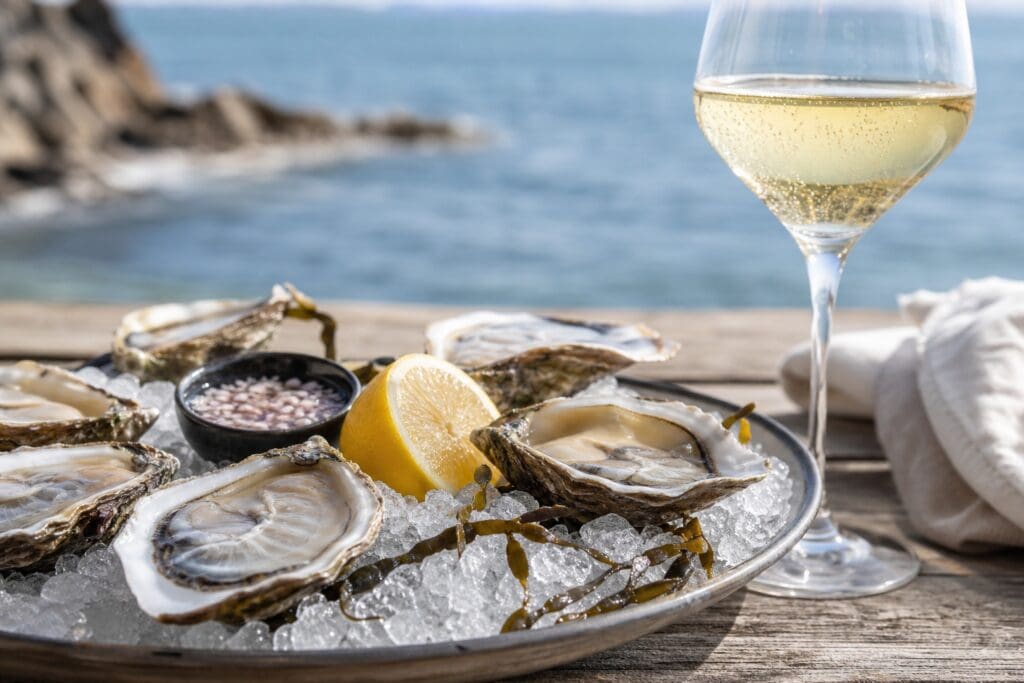
Why do oysters pair so well with Champagne? It is a question with a deliciously simple answer and a more interesting one beneath it. At first glance, the match feels effortless: cold oysters, chilled Champagne, a squeeze of lemon perhaps, and the taste of the sea meeting bright, lively bubbles. Yet the pairing works because of flavour, texture, aroma and balance. Champagne refreshes the palate, oysters bring savoury depth, and together they create one of the most elegant food and drink matches in the world.
Why do oysters pair so well with Champagne?
Oysters and Champagne are a classic pairing because they share, and contrast, the right qualities. Oysters are briny, silky, mineral and often lightly sweet. Champagne is crisp, dry, acidic and sparkling, with flavours that can range from green apple and citrus to brioche, almond and chalky minerality.
When the two meet, Champagne cuts through the oyster’s richness without overwhelming its delicate flavour. The oyster’s salinity makes the wine taste even fresher, while the bubbles lift the texture and clean the mouth after each bite.
This is not a heavy food pairing. It is more like a conversation between two refined ingredients. Neither needs to shout. A good oyster can taste of rock pools, cucumber, seaweed, cream or melon. A good Champagne can echo those fresh, mineral notes while adding energy and structure.
The result is a pairing that feels luxurious but not fussy. It is refreshing, clean and deeply satisfying.
The flavour science behind the match
There is more to this pairing than tradition. Oysters and Champagne work well together because several key taste elements line up beautifully.
Salt and acidity create balance
Oysters are naturally salty because they live in seawater. That saltiness is one of the main reasons they pair so well with Champagne. Salt can soften the sharpness of acidity in wine, making Champagne feel smoother and more rounded.
At the same time, Champagne’s acidity brightens the oyster. Much like lemon juice, it lifts the flavour and stops the oyster from feeling too rich or slippery. This is why a dry, high-acid wine is usually better with oysters than a soft, fruity red wine.
The balance is important. Too much sweetness can clash with the oyster’s briny character. Too much oak can cover its delicacy. Champagne, especially dry styles, brings freshness rather than weight.
Bubbles refresh the palate
Texture matters as much as flavour. Oysters have a soft, silky and sometimes creamy texture. Champagne has fine bubbles that bring movement and brightness.
Those bubbles act like a gentle palate cleanser. They refresh the mouth between oysters, especially when the oysters are served simply on the half shell. This makes the next oyster taste as clear and fresh as the first.
The sparkle also adds contrast. Where the oyster is smooth and still, Champagne is lively and energetic. This contrast is a major part of the pleasure.
Umami and minerality add depth
Oysters have savoury umami notes, especially when they are plump and full-flavoured. Champagne can also have savoury qualities, particularly in styles that have spent time ageing on the lees. These wines may show flavours of toast, biscuit, nuts or cream, which can sit beautifully beside the oyster’s natural depth.
Minerality is another reason the pairing feels so harmonious. While “minerality” is not a single flavour, many people use the word to describe chalky, stony, saline or flinty sensations in wine. Oysters often have similar sea-swept, mineral impressions. Together, they can feel as though they belong to the same landscape: cool, clean and coastal.
What Champagne style is best with oysters?
Not every Champagne tastes the same, and the best choice depends on the oyster, the garnish and your own preference. In general, dry, fresh styles are the safest and most classic options.
A very sweet Champagne is usually not ideal, because sweetness can make oysters taste more metallic or overly salty. A very rich, heavily toasty style may also dominate more delicate oysters. That said, fuller Champagnes can work with meatier oysters or cooked oyster dishes.
Useful Champagne styles for oysters include:
- Brut Nature or Extra Brut: Very dry, sharp and precise, excellent with clean, briny oysters.
- Brut Champagne: The most familiar dry style, often balanced enough for a wide range of oysters.
- Blanc de Blancs: Made entirely from white grapes, usually Chardonnay, often fresh, citrusy and mineral.
- Non-vintage Champagne: Reliable and versatile, especially when served well chilled.
- Vintage Champagne: More complex and rounded, better with larger oysters or richer preparations.
If the oysters are served with lemon, mignonette or a sharp dressing, a crisp Blanc de Blancs or Extra Brut can be especially good. If the oysters are cooked with butter, cream or breadcrumbs, a slightly fuller Brut or mature Champagne may be a better fit.
How oyster types affect the pairing
Oysters are not all the same. Their flavour changes depending on where they are grown, the water they filter, the season, and how they are handled. Some taste intensely salty and clean. Others are creamy, nutty, sweet or seaweed-like.
This variety is part of the fun. Champagne is flexible enough to work with many oyster styles, but the best match depends on the details.
Briny oysters
Oysters with a strong salty, oceanic flavour love crisp Champagne. The wine’s acidity and bubbles sharpen the experience and make the salinity feel fresh rather than heavy.
A very dry Champagne can be excellent here. It will not add sweetness, and it keeps the pairing clean.
Creamy oysters
Some oysters are rounder and richer, with a creamy finish. These can work well with Champagne that has a little more body or bready complexity.
A classic Brut or a Champagne with gentle lees-aged notes can mirror the oyster’s richness while still providing lift.
Sweet and delicate oysters
Lighter oysters with cucumber, melon or fresh almond notes need a gentle touch. A precise Blanc de Blancs can be a strong choice because it brings citrus and chalky freshness without masking the oyster.
With delicate oysters, keep garnishes simple. Too much chilli, vinegar or sauce can make both the oyster and the Champagne harder to appreciate.
Serving oysters and Champagne well
This pairing does not need elaborate presentation, but small details make a noticeable difference. Temperature, freshness and seasoning all matter.
Oysters should be properly chilled, freshly opened and served in their shells. Champagne should be cold but not icy to the point that all flavour disappears. A narrow wine glass or tulip-shaped glass can help preserve bubbles while allowing aroma to develop.
Simple serving ideas include:
- Natural oysters with lemon: Clean, bright and classic, especially with Brut or Blanc de Blancs.
- Oysters with mignonette: Shallot and vinegar add sharpness, so choose a dry, high-acid Champagne.
- Oysters with cucumber: A cooling garnish that suits mineral, citrus-led Champagne.
- Grilled oysters with butter: Richer and warmer, better with fuller Brut or mature Champagne.
- Oysters with seaweed or herbs: Savoury flavours that can suit Champagne with gentle toast or nutty notes.
Avoid overpowering the oyster with too much hot sauce or heavy dressing if Champagne is the focus. Strong flavours can flatten the wine and hide the oyster’s natural character.
Why the pairing feels so celebratory
Part of the appeal is cultural. Oysters and Champagne both carry a sense of occasion. They are often linked with celebrations, restaurants, festive gatherings and seaside indulgence. In the UK, they may appear at Christmas, New Year, weddings, birthdays or special lunches.
But the pairing is not only about luxury. It also feels celebratory because it is sensory and immediate. You hear the cork, see the bubbles, smell the sea, taste the salt and citrus, and feel the cold oyster slip from the shell. Few pairings are so direct.
There is also a pleasing simplicity to it. No complex cooking is required when the oysters are served raw. The pleasure comes from freshness and balance. That makes the combination feel both refined and natural.
Common mistakes to avoid
Even a great pairing can fall flat if the details are wrong. The most common issues are simple and easy to understand.
First, avoid serving Champagne too warm. Warm Champagne can taste heavy and less refreshing, especially beside raw oysters. Equally, do not freeze it into dullness; it should still have aroma and flavour.
Second, be careful with sweetness. Demi-sec and sweeter sparkling wines are generally less successful with oysters because sugar can clash with salt and iodine-like notes.
Third, think about the garnish. Lemon is traditional for a reason, but too much can make the wine seem sharp. Vinegar-based sauces are delicious, yet they need a wine with enough acidity to keep up.
Finally, freshness matters. Oysters are highly perishable and should always be bought, stored and prepared safely. If an oyster smells unpleasant rather than clean and marine, it should not be eaten.
Frequently Asked Questions
Is Champagne always the best drink with oysters?
Champagne is one of the best matches, but it is not the only option. Dry English sparkling wine, Muscadet, Chablis and very dry fino sherry can also work well. The key is freshness, acidity and a clean finish that respects the oyster.
Should oysters be served with lemon when drinking Champagne?
Lemon can work very well because it echoes Champagne’s citrus freshness. However, it is best used lightly. Too much lemon can overpower delicate oysters and make the wine feel sharper than intended, especially with very dry Champagne styles.
Does rosé Champagne pair well with oysters?
Rosé Champagne can pair with oysters, particularly richer or lightly cooked styles. For plain raw oysters, a very fruity rosé may feel less precise than a dry Blanc de Blancs. Choose a crisp, restrained rosé rather than a soft, sweet-tasting one.
What is the best Champagne for beginners eating oysters?
A well-balanced Brut Champagne is usually the easiest starting point. It offers freshness, bubbles and enough roundness to suit many oyster types. Beginners may find very dry Extra Brut styles exciting, but sometimes a little sharper.
Can you pair cooked oysters with Champagne?
Yes, cooked oysters can be excellent with Champagne, especially when grilled or baked with butter, herbs or breadcrumbs. Richer preparations often suit a fuller Brut or mature Champagne, because the wine needs enough body to match the dish.